

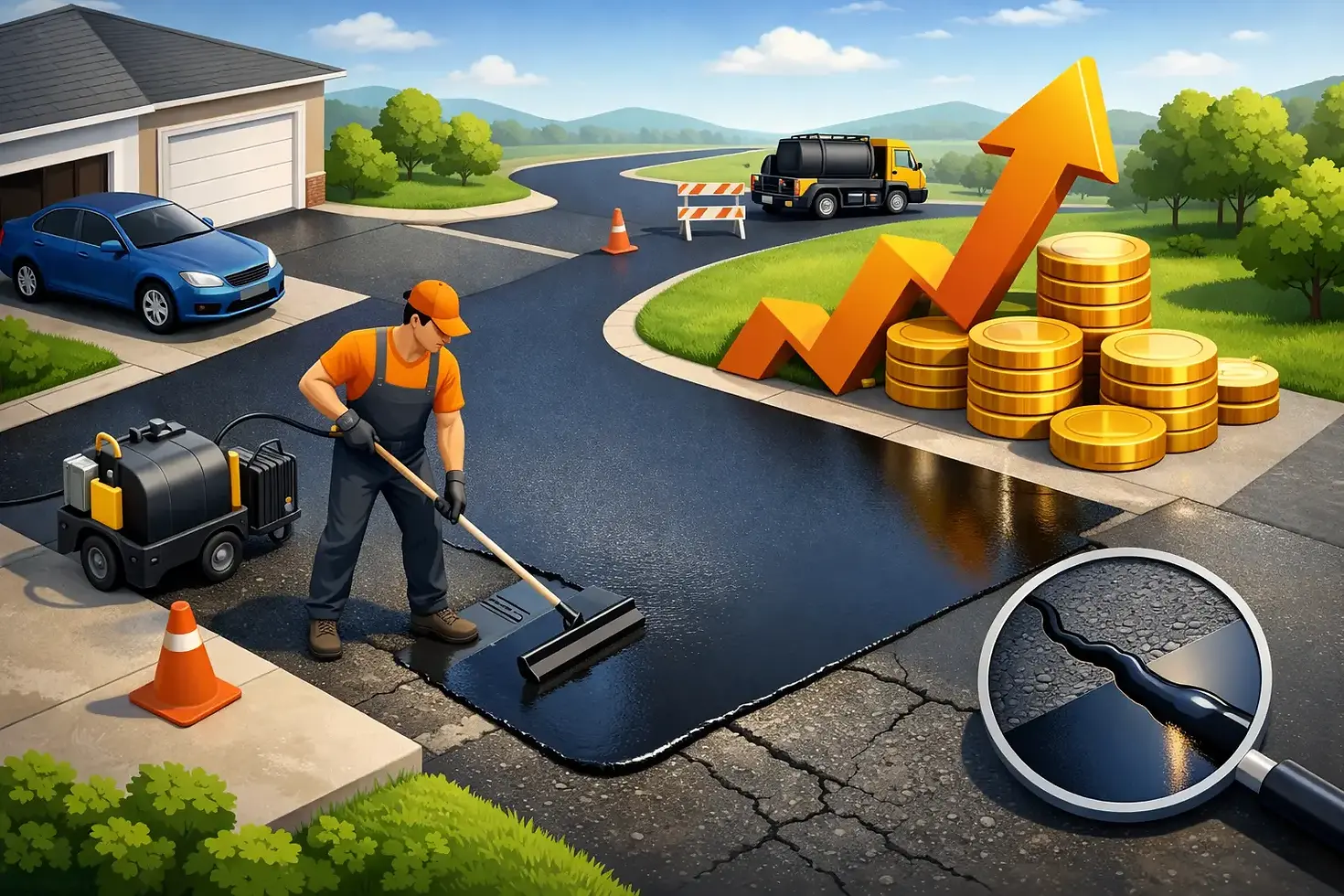
Asphalt Sealcoating: When It Pays Off
- nettiedrown
- Jul 4
- 5 min read
Fresh blacktop never stays fresh-looking for long near the coast. Sun, rain, salt air, traffic, and drainage issues can wear on asphalt faster than most property owners expect. That is why asphalt sealcoating comes up so often for driveways, parking lots, and private roads across Delmarva. It is one of the simplest maintenance services available, but it only works well when the surface is in the right condition and the timing makes sense.
What asphalt sealcoating actually does
Sealcoating is a protective surface treatment applied over asphalt. It is not the same thing as paving, resurfacing, or patching. It does not rebuild failed pavement, fix deep structural cracks, or correct drainage problems. What it does is add a protective layer that helps the asphalt resist oxidation, moisture intrusion, and surface wear.
For homeowners, that usually means a driveway that keeps a darker, more finished appearance and holds up better between major repairs. For commercial properties, it can help maintain a cleaner-looking lot and slow down the aging that comes from traffic, weather, and daily use. In both cases, the goal is protection, not miracle repair.
That distinction matters. A lot of disappointment with sealcoating starts when people expect it to cover major flaws or make badly damaged asphalt look new again. If the base is failing or the surface is badly cracked, sealcoating alone is not the right fix.
When asphalt sealcoating makes sense
The best time to sealcoat is when the asphalt is still fundamentally sound. If the pavement has minor surface wear, faded color, light weathering, or small cracks that can be addressed first, sealcoating is often a smart maintenance step. It works best as prevention.
For newer asphalt, timing matters. Fresh pavement generally needs time to cure before it should be sealed. Seal it too early and the surface may not perform the way it should. Wait too long and the asphalt may begin drying out and oxidizing more than necessary. The right window depends on the mix, the weather, and how the surface is being used.
For older pavement, the question is less about age and more about condition. A driveway or parking area with solid structure but visible wear may be a strong candidate. A lot with widespread cracking, soft spots, pooling water, or edge breakdown may need repair or resurfacing first.
That is where a local evaluation helps. Coastal conditions in places like Ocean City, Ocean Pines, Ocean View, and Dagsboro are different from inland markets. Moisture, temperature swings, and traffic patterns all affect how asphalt ages.
What sealcoating can and cannot fix
Sealcoating can improve appearance and add a layer of protection, but it has limits. It can darken faded pavement and create a more uniform finish. It can also reduce the effects of UV exposure and help slow surface deterioration. On commercial properties, it often pairs well with fresh striping because it gives the lot a cleaner background and a more maintained look.
What it cannot do is solve structural issues. If alligator cracking is present, if potholes are forming, or if water is sitting on the surface because of grading problems, those conditions need to be addressed directly. Putting sealcoat over failing asphalt may make it look better for a short time, but it will not stop the failure underneath.
This is one of the biggest trade-offs property owners should understand. Sealcoating is cost-effective when used as part of a maintenance plan. It is not cost-effective when used to delay necessary repairs that are already overdue.
Why coastal properties often need a closer look
In the Delmarva region, asphalt deals with more than just passing seasons. Coastal weather brings a mix of moisture, sun exposure, and salt air that can be hard on paved surfaces. Add in sand, heavy summer traffic, delivery vehicles, and freeze-thaw cycles during colder months, and surface wear can accelerate.
Driveways near the beach may fade faster than owners expect. Parking lots at retail sites, condo properties, and mixed-use buildings can show wear patterns from turning vehicles, standing water, or high-traffic lanes. In these settings, sealcoating can be a useful way to extend surface life, but only if the lot has been properly prepared.
Preparation is where quality often shows. Cleaning the surface, treating oil spots where possible, and filling cracks before applying sealcoat all affect the final result. A rushed job may look acceptable at first and then break down early. A properly prepared surface typically holds up better and looks more consistent.
How often should asphalt be sealcoated?
There is no single schedule that fits every property. Traffic volume, weather exposure, drainage, and pavement condition all matter. Some residential driveways may benefit from sealcoating every few years. Some commercial lots may need a tighter maintenance cycle because of heavier use. Others may need repairs first and sealcoating later.
If a surface still has strong color, minimal wear, and no real signs of oxidation, it may not need immediate attention. If it is turning gray, looking dry, or beginning to show surface deterioration, that may be the point where sealcoating becomes worth considering.
Overdoing it is not necessarily better. Applying sealcoat too often without regard to the pavement's condition can create buildup and does not always add value. Good maintenance is about timing, not just frequency.
What property owners should expect during the process
For most driveways and parking areas, sealcoating is a straightforward service, but it does require planning. The surface needs to be cleaned and prepared. Cracks may need to be filled first. Weather conditions need to cooperate because temperature and drying time matter.
Once the sealcoat is applied, the area must stay clear long enough to cure properly. That can affect home access, parking, tenant movement, or customer flow depending on the site. For commercial properties, scheduling is especially important. Work may need to be phased or timed to limit disruption.
Appearance right after application is usually the most dramatic part for property owners. The pavement looks darker, cleaner, and more defined. Over time, that finish will weather naturally. The real value is not just the immediate visual improvement. It is the added protection that helps slow wear between larger investments.
Sealcoating for homes vs. commercial properties
Homeowners often think about sealcoating in terms of curb appeal and driveway protection. That makes sense. A driveway is one of the first things people see, and a worn surface can make the whole property look more tired than it is. Sealcoating can refresh that appearance while helping protect the asphalt from the elements.
Commercial owners and property managers usually have a broader set of concerns. They are thinking about tenant impressions, customer access, maintenance budgets, and liability tied to pavement condition. In those cases, sealcoating is often part of a larger pavement management approach that may also include crack filling, patching, striping, and occasional resurfacing.
The service is the same, but the priorities are different. A homeowner may be focused on appearance and longevity. A business owner may be focused on image, scheduling, and keeping a lot serviceable without overspending.
Choosing the right approach
The best sealcoating decisions are based on condition, not guesswork. If the asphalt is in good shape overall, sealcoating can be a practical way to protect your investment and keep the property looking maintained. If the pavement is already breaking down in multiple areas, repair or resurfacing may be the smarter next step.
That is why a straightforward assessment matters. A dependable contractor should be able to tell you whether sealcoating is the right fit now, whether repairs should come first, or whether the surface has moved beyond maintenance into replacement territory. Clear advice saves money.
At O.C. Paving, that practical approach matters because every property is different. A residential driveway in a quiet neighborhood does not wear the same way as a busy commercial lot near the beach, and the right recommendation should reflect that.
Asphalt does not stay in perfect condition on its own, especially in coastal Maryland and Delaware. But it also does not always need a major overhaul. Sometimes the right move is simple, well-timed maintenance that protects what you already have and keeps the surface working the way it should.


Comments