

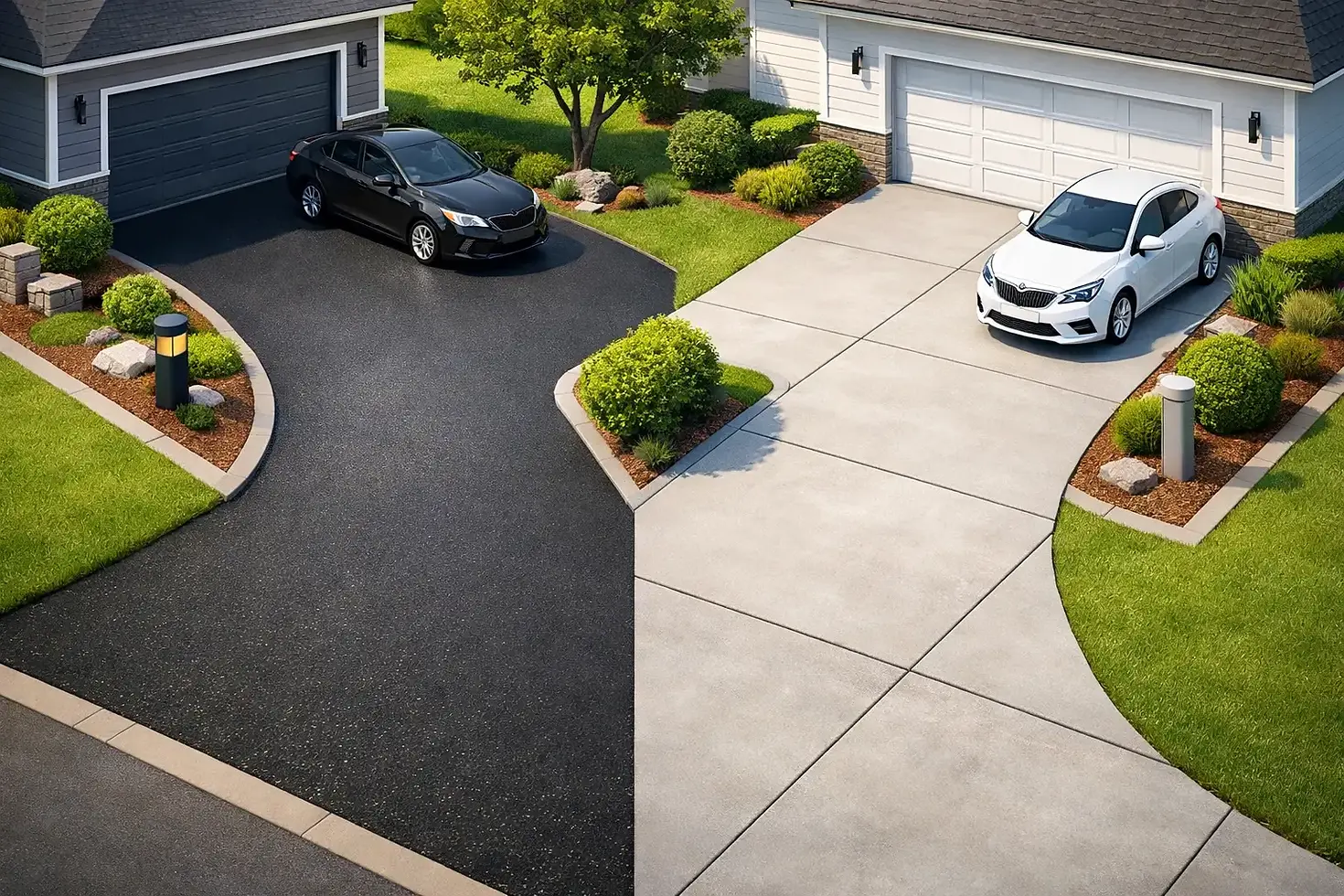
Asphalt vs Concrete Driveway: Which Fits?
- nettiedrown
- Apr 15
- 6 min read
A driveway near the coast has a tougher job than people think. Between summer heat, salt air, heavy rain, freeze-thaw cycles, and daily traffic, the surface you choose needs to look good and hold up. If you are weighing an asphalt vs concrete driveway for a home or commercial property in Delmarva, the right answer usually comes down to budget, appearance, maintenance expectations, and how you use the space.
Asphalt vs Concrete Driveway: The Real Difference
At a glance, asphalt and concrete both create a clean, finished driveway. But they behave differently over time, and that matters more than many property owners expect.
Asphalt is a flexible paving material made with aggregates and binder. That flexibility helps it handle temperature changes and normal vehicle traffic well. Concrete is a rigid slab material that offers a crisp, bright appearance and a long service life, but it can be less forgiving when the ground shifts or weather conditions put stress on the surface.
For many local properties, the choice is not just about which material is "better." It is about which one fits the property, the budget, and the owner’s willingness to stay ahead of maintenance.
Cost: What You Pay Up Front and Over Time
For most homeowners, price is where the conversation starts. In general, asphalt has a lower initial installation cost than concrete. That makes it appealing when you want a durable driveway without stretching the project budget too far.
Concrete usually costs more up front, especially if the layout is large or the finish is decorative. If you want stamped or colored concrete, the price can climb quickly.
That said, the cheaper option at installation is not always the cheaper option over the full life of the driveway. Asphalt typically needs periodic sealcoating and occasional repairs to stay in good shape. Concrete often needs less routine surface maintenance, but when it does crack or settle, repairs can be more noticeable and sometimes more expensive.
If your priority is controlling initial project costs, asphalt often has the edge. If your priority is investing more now for a different visual style and potentially longer lifespan, concrete may deserve a closer look.
Appearance and Curb Appeal
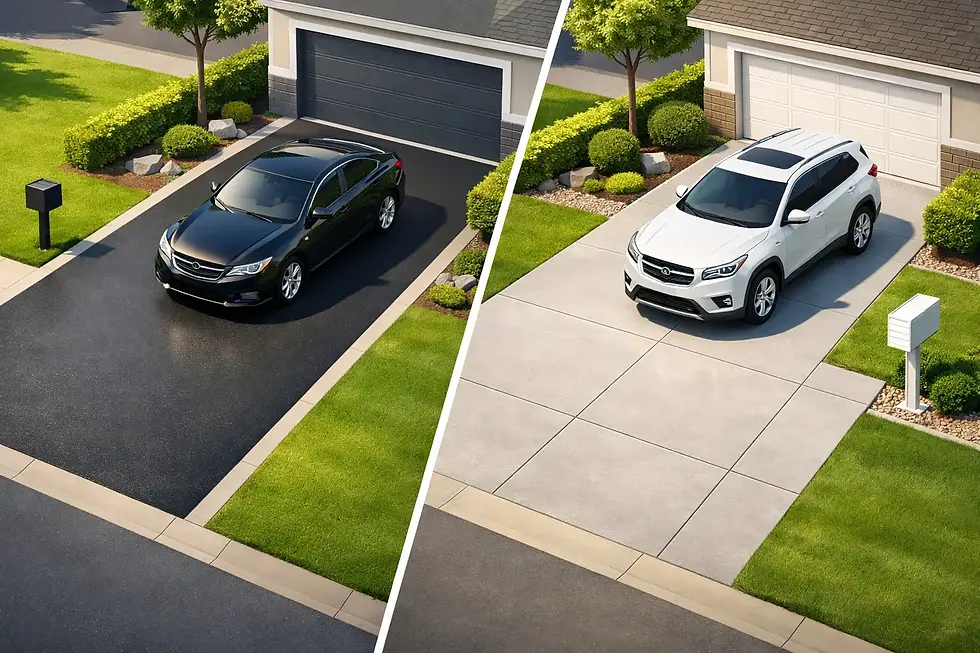
Concrete gives a property a lighter, more architectural look. It can feel especially fitting on newer homes, custom builds, or properties where design details are a major focus. It also offers more decorative options if you want texture, patterns, or color variation.
Asphalt has a darker, cleaner, more traditional appearance. On many residential driveways and commercial lots, that rich black finish looks sharp and practical. It pairs well with brick borders, paver accents, and a wide range of home styles without feeling overdone.
In beach communities and surrounding Delmarva neighborhoods, many owners want curb appeal that looks neat and durable without becoming high maintenance. That is one reason asphalt remains a popular choice. It delivers a finished look that works well across both homes and business properties.
Performance in Delmarva Weather
Local conditions should have a big role in this decision. Coastal Maryland and Delaware see heat, humidity, rain, and seasonal freezing. Those swings can affect paving materials differently.
Asphalt handles freeze-thaw movement well because it has some flexibility. When the base is properly prepared and drainage is addressed, it can perform reliably through changing conditions. It also tends to be easier to patch if small issues develop over time.
Concrete can absolutely perform well too, but it is more prone to visible cracking if the slab is stressed by ground movement, poor drainage, or weather extremes. Expansion joints help, but they do not eliminate the risk entirely.
There is also the surface temperature question. Asphalt absorbs more heat and gets hotter in direct sun. Concrete reflects more light and may stay somewhat cooler. For some property owners, especially around uncovered parking areas, that is a consideration. For others, durability and repairability matter more.
Maintenance Expectations
No driveway is fully maintenance-free. The difference is what that maintenance looks like.
Asphalt benefits from ongoing care. Sealcoating helps protect the surface from oxidation, water intrusion, and wear. Small cracks should be addressed before they expand. The good news is that asphalt maintenance is usually straightforward, and resurfacing can often restore the look and function of an aging driveway without a full replacement.
Concrete does not need sealcoating in the same way asphalt does, though some owners choose protective sealing depending on the finish. It can still stain, crack, and develop surface wear. Oil spots may stand out more on concrete, and once cracks appear, they are often harder to disguise.
If you prefer a surface that can be refreshed and repaired in a more blended way, asphalt has an advantage. If you prefer less frequent routine upkeep and accept that repairs may be more visible, concrete may still be a good fit.
Lifespan and Long-Term Value
A well-installed driveway of either type should serve a property for years. Installation quality matters just as much as material choice. A poor base, weak drainage plan, or rushed finish can shorten the life of both asphalt and concrete.
Concrete is often associated with a longer potential lifespan, particularly when installed correctly and not overloaded. Asphalt may have a shorter total life span in some cases, but it is also easier to maintain in stages. That can make its real-world value stronger than people assume.
For example, an asphalt driveway that is sealcoated on schedule and resurfaced when needed can continue performing well without the cost and disruption of a full tear-out every time the surface starts showing age. That practical serviceability is a major reason many property owners continue to choose it.
Repairs, Resurfacing, and Future Flexibility
This is one of the biggest differences in the asphalt vs concrete driveway conversation, especially for owners thinking beyond the first installation.
Asphalt is generally easier to repair, expand, and resurface. If sections wear down, crack, or settle, there are often efficient ways to improve the surface without replacing the entire driveway. That is helpful for aging properties, phased upgrades, and commercial sites that need practical solutions.
Concrete repairs can be done, but matching the original finish is difficult. Even when the repair is structurally sound, the patched area may remain visually obvious. If the slab has widespread issues, replacement may be the cleaner solution.
For owners who want flexibility over time, asphalt is often easier to live with.
Which Material Fits Different Property Types?
For a standard residential driveway, asphalt is often the more practical choice. It is cost-effective, attractive, and well suited for everyday vehicle use. It also makes sense for long driveways, where concrete costs can rise quickly.
For custom homes or properties where a brighter, more decorative finish is a priority, concrete may be worth the extra investment. Some owners simply prefer that appearance and are comfortable with the higher upfront price.
For multi-unit properties, retail sites, and commercial spaces, asphalt is frequently the stronger fit because it is efficient to install, maintain, and repair. It also works well for parking areas and larger paved surfaces where long-term serviceability matters.
So, Which One Should You Choose?
If you want the shortest answer, asphalt usually makes the most sense for property owners who value affordability, dependable performance, easier repairs, and a clean, professional look. Concrete often makes sense for those who are comfortable spending more up front for a different aesthetic and potentially longer slab life.
The best choice depends on how the driveway will be used, how long you plan to stay on the property, how much maintenance you are willing to keep up with, and what kind of appearance fits the home or site.
For many Delmarva properties, asphalt strikes the right balance. It performs well in local conditions, keeps initial costs more manageable, and offers practical options for future maintenance and resurfacing. That balance is why contractors like O.C. Paving continue to see strong demand for asphalt driveways across homes, businesses, and coastal communities.
Before making a final decision, it helps to look at the property itself - drainage, grade, traffic load, layout, and curb appeal goals all matter. A good driveway is not just about material. It is about choosing a surface that fits the way your property works every day.
If you are comparing options, the smartest next step is to think less about what sounds best in theory and more about what will serve your property well year after year.


Comments