

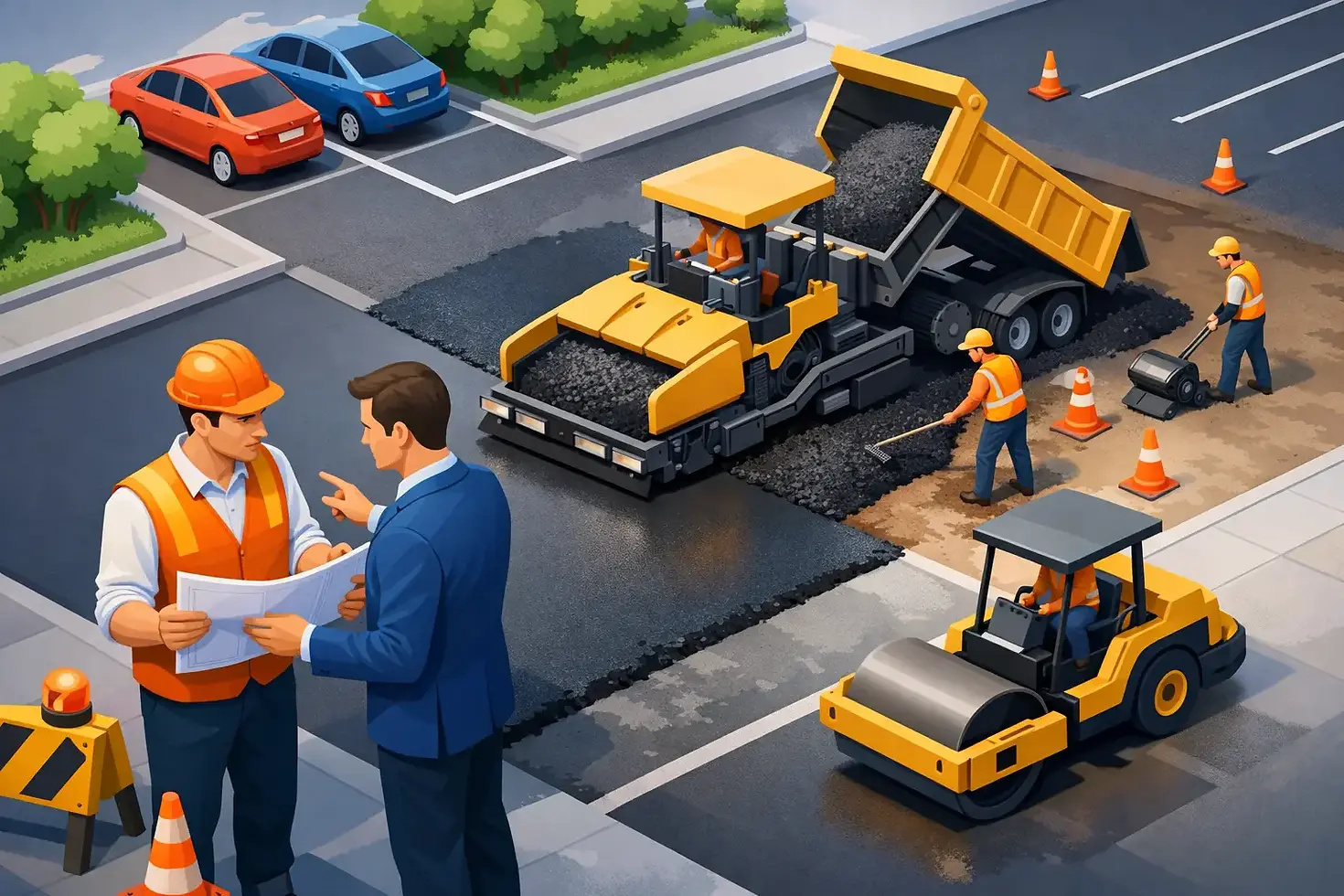
Choosing a Parking Lot Paving Contractor
- nettiedrown
- Apr 1
- 5 min read
A parking lot does its job quietly until it stops doing it well. Customers notice puddles at the entrance, tenants complain about rough patches, and faded striping makes the whole property look tired. When that starts happening, hiring the right parking lot paving contractor becomes less about appearance alone and more about safety, drainage, and protecting the value of the site.
For business owners and property managers in coastal Maryland and Delaware, that decision also comes with local conditions that matter. Heat, salt air, heavy summer traffic, freeze-thaw cycles, and stormwater all put pressure on asphalt. A surface that looks fine after installation can break down early if the base, grading, or maintenance plan is off. That is why the contractor you choose matters just as much as the material itself.
What a parking lot paving contractor should actually help with
A good contractor does more than place asphalt. The job starts with evaluating how the lot is being used, where water is moving, what the sub-base looks like, and whether the existing pavement can be resurfaced or needs full replacement. In some cases, a worn lot only needs targeted repairs and a new overlay. In others, surface cracks are hiding deeper failure underneath.
That difference matters because the cheapest proposal is not always the lowest-cost decision over time. If a contractor installs new asphalt over a failing base, the lot may look clean for a season and then start shifting, cracking, or holding water again. On the other hand, tearing everything out when the foundation is still sound can push the budget higher than necessary. A dependable contractor explains the condition of the lot in plain language and recommends the level of work that actually fits the site.
How to tell whether you need repair, resurfacing, or replacement
Many property owners know the lot looks bad but are not sure what category of work makes sense. Surface wear, minor cracking, and faded appearance often point to maintenance or resurfacing. Widespread potholes, drainage problems, crumbling edges, and soft areas can point to structural issues below the surface.
Resurfacing works best when the underlying pavement still has strength. The contractor repairs damaged sections, prepares the surface, and places a new asphalt layer to restore appearance and performance. Full replacement makes more sense when the base has failed or when repeated patching is no longer solving the problem. Sealcoating and crack filling are useful for extending life, but they are maintenance tools, not fixes for a lot that is already breaking down.
A reliable contractor should walk you through that distinction without overselling. If every problem is answered with full replacement, that is worth questioning. If every problem is waved off with a cosmetic fix, that is just as concerning.
What to look for in a parking lot paving contractor
The first thing to look for is local experience. A contractor who works regularly in the Delmarva region understands the demands of coastal conditions and the expectations of local commercial properties, retail centers, multi-unit sites, and community associations. That familiarity helps with scheduling, material choices, drainage planning, and practical jobsite coordination.
Communication matters just as much. You should be able to get a clear explanation of the scope, schedule, and expected disruption. For an active business property, that is not a small detail. A paving project affects access, traffic flow, deliveries, and tenant convenience. The right contractor plans around those realities instead of treating them as an afterthought.
It also helps to look at whether the company handles the full surface picture. Parking lots rarely exist in isolation. You may need asphalt paving, resurfacing, sealcoating, striping coordination, or nearby hardscape improvements. Working with a contractor that can assess the site as a whole often leads to a better long-term result than treating each problem separately.
Why drainage is often the real issue
Many parking lot problems look like asphalt problems at first. In reality, they are water problems. Standing water weakens the pavement, creates safety concerns, and speeds up cracking and pothole formation. If low spots are left in place during paving, the lot may continue failing no matter how fresh the surface looks on day one.
That is why grading and drainage should be part of the conversation early. A strong contractor checks slopes, identifies trouble areas, and explains whether drainage improvements are needed before paving starts. This can affect budget, but it usually saves money compared with repaving a lot that will keep trapping water.
There is a trade-off here. Correcting drainage may increase the upfront scope of work, especially on older lots or properties that have settled over time. But ignoring it often leads to recurring repairs, premature wear, and a shorter service life.
Cost matters, but scope matters more
Most property owners ask the same fair question first: how much will it cost? The honest answer is that it depends on lot size, condition, thickness requirements, prep work, drainage needs, and whether the project is repair, resurfacing, or full replacement.
What matters more than the raw number is whether two estimates are pricing the same job. One proposal may include proper base repair, edge work, and surface preparation. Another may appear lower because it leaves out key steps that affect durability. If bids vary widely, ask what each one includes before comparing them side by side.
A clear estimate should explain the work in terms you can follow. You should know what areas are being repaired, what material is being installed, how the site will be prepared, and what the expected timeline is. If the proposal feels vague, the project may feel vague too.
Timing and disruption for active properties
Parking lot work is easier to manage when the schedule is realistic. For retail properties, apartment communities, offices, and hospitality sites, access planning is part of the job. A contractor should be able to discuss phasing, traffic control, cure time, and how to reduce disruption while still protecting the quality of the work.
This is especially important in beach and seasonal markets where traffic patterns change quickly. A project that works well in the off-season may be difficult to manage in peak months. Local contractors tend to understand that balance better because they have worked around it before.
If your property stays open during construction, ask how access will be handled from start to finish. That conversation should happen before the job begins, not after equipment arrives.
Maintenance after paving is not optional
A new lot is not a one-time fix you can forget about for years. Asphalt lasts longer when it is maintained on a schedule that fits the property. That usually means addressing cracks early, keeping drainage areas clear, and sealcoating at the right interval instead of waiting until the surface looks severely worn.
This is one area where experienced contractors add real value. They do not just finish the job and disappear. They help property owners understand what to watch for and when to act. That approach protects the investment and reduces the chance that small issues turn into major repairs.
For many commercial properties, a sensible maintenance plan is what keeps resurfacing and replacement from arriving sooner than expected.
Choosing a local partner instead of a one-time crew
The best paving projects usually come from clear communication and local accountability. You want a contractor who will answer questions, give a straightforward recommendation, and stand behind the work after the equipment leaves. That matters even more when your property is part of a community and appearance, access, and safety all affect how people experience the site.
A local company like O.C. Paving understands that paving work is not just about asphalt. It is about helping owners and managers keep their properties functional, presentable, and ready for the people who use them every day. That kind of practical partnership is often the difference between a job that simply gets completed and one that holds up well over time.
If you are comparing contractors, look beyond the fresh black finish in the proposal photos. Ask who is paying attention to drainage, preparation, timing, and long-term performance. A parking lot should make your property easier to use and easier to maintain, and the right contractor will treat it that way from the start.


Comments