

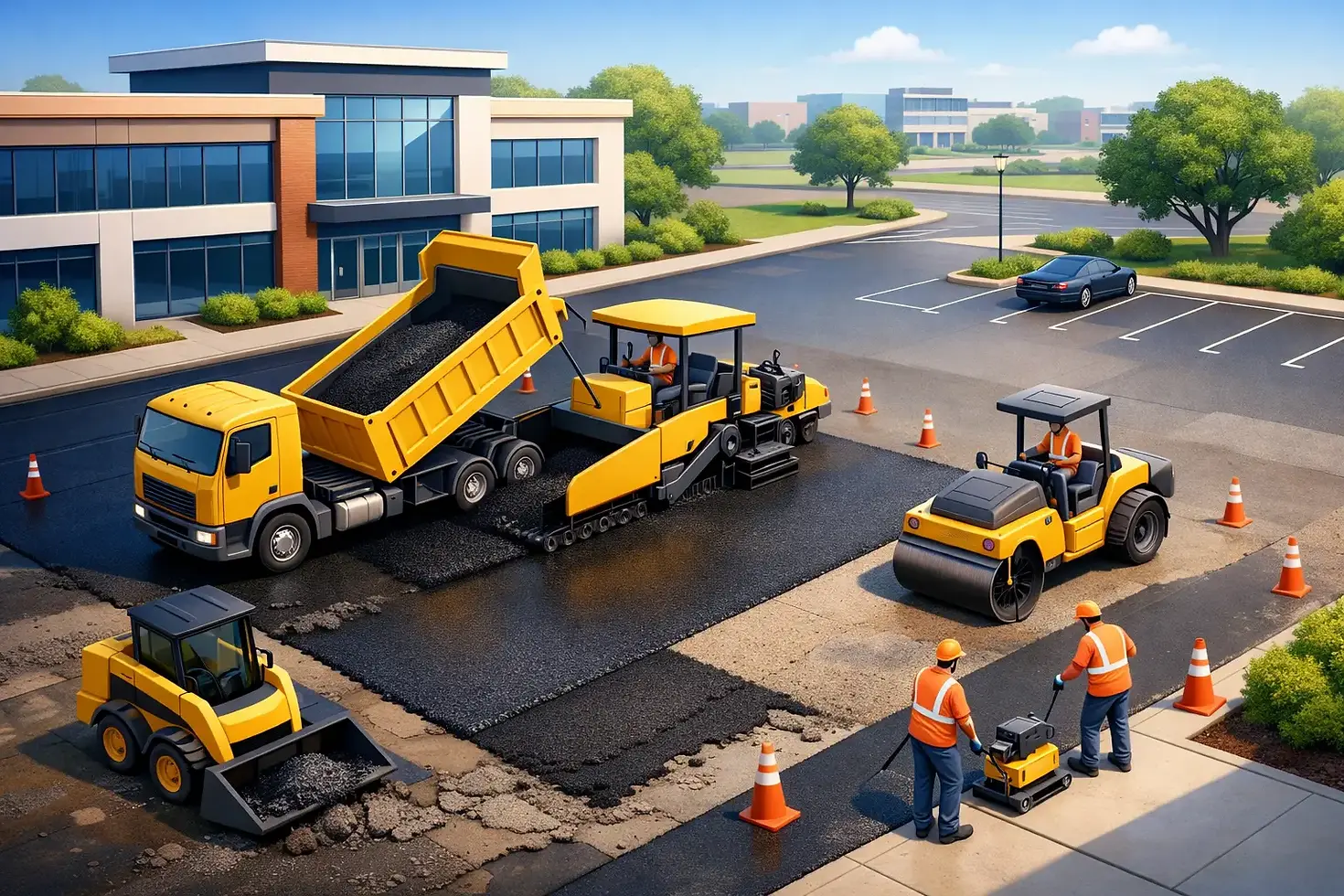
Commercial Asphalt Resurfacing Guide
- nettiedrown
- Apr 25
- 6 min read
A parking lot rarely fails all at once. It usually starts with surface cracks, low spots that hold water after rain, faded striping, and rough patches near entrances or loading areas. This commercial asphalt resurfacing guide is for property owners, managers, and facility teams who need to decide whether resurfacing is the right move, how the process works, and what kind of result to expect.
For many commercial properties, resurfacing sits in the middle ground between short-term patching and full replacement. That makes it a practical option when the surface is worn but the underlying structure is still in decent condition. If you manage a retail center, office lot, apartment community, or small commercial facility in coastal Maryland or Delaware, knowing where resurfacing fits can help you protect the property without spending more than the site truly needs.
What commercial asphalt resurfacing actually means
Resurfacing is the process of installing a new layer of asphalt over an existing paved surface after the damaged areas have been addressed. The goal is not to hide major failure. The goal is to restore ride quality, improve appearance, and extend the life of a lot that still has a workable base.
A proper resurfacing job usually starts with a site evaluation. Contractors look at the current pavement condition, drainage patterns, cracking, edge wear, and traffic demands. If the lot has isolated failures, those areas may need repair before the new overlay goes down. Once the prep work is complete, a fresh asphalt layer is installed and compacted to create a smoother, more uniform surface.
That sounds simple, but the value of resurfacing depends on the condition below the surface. If the base has failed across large sections, resurfacing may only delay bigger problems for a short time.
When resurfacing makes sense
The best candidates for commercial resurfacing are lots that show visible wear but still have structural integrity. Surface oxidation, moderate cracking, minor raveling, and roughness are common signs that the pavement is aging. If those issues are addressed early enough, resurfacing can add years of service life and improve curb appeal in one project.
It also makes sense when you are trying to bring a property up to standard without the cost and disruption of a full rebuild. For shopping areas, HOA-managed roads, office complexes, and hospitality properties, appearance matters. A clean, dark surface with fresh striping changes how people see the site right away.
Timing matters too. If you wait until water has moved deep into the pavement structure and repeated freeze-thaw cycles have widened the damage, your options narrow. Resurfacing is often a smarter investment when done before the lot reaches that point.
When resurfacing is not enough
A good commercial asphalt resurfacing guide should be honest about the limits. Resurfacing is not the right solution for every lot.
If you have widespread alligator cracking, major base movement, deep rutting, chronic drainage failure, or repeated potholes in the same areas, the pavement may need more than an overlay. Those problems usually point to structural weakness underneath. In that case, putting fresh asphalt on top may improve the look for a while, but it will not correct the reason the pavement is failing.
This is where an experienced contractor earns trust. A dependable recommendation is not always the cheapest one upfront. Sometimes the better long-term decision is partial reconstruction or full replacement in the worst areas, followed by resurfacing where the pavement can still be saved.
The commercial asphalt resurfacing guide to the process
From a property management standpoint, resurfacing goes more smoothly when you know the steps ahead of time. Each site is different, but most commercial projects follow a similar path.
Site evaluation and scope planning
The first step is assessing the lot. A contractor will review pavement condition, current drainage, traffic flow, curb transitions, and the use of the site. A small professional office has different needs than a busy convenience store or apartment complex with constant vehicle movement.
This stage is also where phasing gets discussed. Many commercial sites cannot shut down all at once. A practical resurfacing plan may need to break the work into sections so customers, residents, or staff can still access the property.
Surface preparation and repairs
Preparation is where a lot of resurfacing projects succeed or fail. Damaged sections may need milling, patching, crack treatment, or leveling before new asphalt is placed. If low spots are causing standing water, those should be corrected as part of the prep work whenever possible.
Simply paving over visible trouble spots without proper repair often leads to the same defects showing back through the new surface. That is why prep should never be treated like a minor detail.
Overlay installation
Once the site is ready, the new asphalt layer is placed over the prepared surface and compacted. The thickness depends on the site condition and traffic demands. Commercial lots that handle delivery trucks or heavier use may require a different approach than lighter-duty parking areas.
Weather and scheduling matter here. Asphalt work needs the right conditions to be installed and compacted properly. For busy properties, planning around tenant needs, customer access, and seasonal traffic can make a real difference.
Striping and final details
After the asphalt cures enough for the next step, striping and markings are applied. This includes parking stalls, directional arrows, fire lanes, ADA markings, and other site-specific details. For many commercial properties, this final stage is what makes the resurfacing job feel complete.
Cost, lifespan, and what affects both
Property owners often ask the same question first: is resurfacing worth it? The honest answer is that it depends on the current condition of the pavement and how long you expect the fix to last.
A well-timed resurfacing project is usually more cost-effective than full replacement, especially when the base remains sound. It can extend pavement life, improve safety, and refresh the site at a lower overall cost. But if the underlying lot is already failing, resurfacing can turn into a short-lived expense instead of a long-term improvement.
Lifespan depends on several factors, including traffic volume, drainage, existing pavement condition, overlay thickness, maintenance habits, and installation quality. Coastal environments also matter. In Delmarva communities, pavement deals with salt exposure, summer heat, heavy rain, and seasonal wear. Those conditions make proper drainage and timely maintenance even more important.
How to prepare your property for resurfacing
The smoother the planning, the smoother the project. For commercial sites, access and communication are often just as important as the paving itself.
Start by identifying your busy hours, delivery schedules, tenant concerns, and any access points that must stay open. If the lot serves residents, customers, or employees daily, staged work may be the best fit. Clear notice ahead of time helps avoid confusion and keeps the project moving.
You should also think beyond the asphalt mat. If signs, curbs, drainage structures, or traffic markings need attention, it is often more efficient to coordinate those items during the same project window. A resurfaced lot looks better and performs better when the surrounding details are part of the plan.
Choosing the right contractor for the job
Resurfacing is not a product you buy off a shelf. It is a field-built service, and the contractor matters. Commercial clients should look for a company that can explain the condition of the lot clearly, identify where resurfacing works and where it does not, and map out a realistic plan for access, scheduling, and long-term performance.
Local experience is a real advantage. A contractor familiar with beach-area and inland Delmarva conditions will better understand how moisture, drainage, and seasonal changes affect pavement. That kind of practical knowledge can shape better recommendations from the start. Companies like O.C. Paving work with both residential and commercial surfaces in this region, which helps when a project needs a tailored approach rather than a one-size-fits-all answer.
It also helps to ask how prep work will be handled, whether traffic can be phased during the project, and what maintenance is recommended after completion. Straight answers on those points usually tell you a lot about how the job will be managed.
What to do after resurfacing
A new surface is not maintenance-free. It is a fresh start.
Routine inspections, crack filling when needed, sealcoating at the proper interval, and keeping water from sitting on the pavement all help protect the investment. The biggest mistake many property owners make is waiting until the surface looks clearly worn again before taking action. Light maintenance at the right time is far less expensive than letting avoidable damage build up.
If your lot has started to look tired but is not yet beyond repair, resurfacing may be the right next step. The key is getting an honest assessment before small surface problems turn into larger structural ones. A well-planned job should do more than improve appearance - it should give your property a cleaner, safer, longer-lasting surface that fits how the site is actually used.


Comments