


Driveway Design Trends That Make Sense
- nettiedrown
- Jun 20
- 6 min read
A lot of driveway upgrades look great for the first season and start causing headaches by the second. Along the Maryland and Delaware coast, that usually comes down to a simple issue: some driveway design trends photograph well, but they do not always hold up to heavy use, drainage problems, salt air, and changing temperatures. The best upgrades are the ones that improve the way a property looks and the way it works.
For homeowners and property managers in places like Ocean City, Ocean Pines, Ocean View, and Dagsboro, that balance matters. A driveway is one of the first things people notice, but it also takes daily wear from vehicles, foot traffic, runoff, and weather. If you are planning a new driveway or reworking an older surface, the current trend is not just about appearance. It is about choosing a layout, surface, and finish that fits the property and lasts.
The driveway design trends homeowners are actually choosing
What stands out right now is not one dramatic style. It is a shift toward cleaner, more tailored driveways that feel intentional. Property owners want better curb appeal, but they also want fewer maintenance issues and a surface that makes sense for how they use the space.
That is why smooth, well-finished asphalt remains a strong choice. It gives a neat, uniform look that fits everything from beach-area cottages to larger year-round homes. At the same time, more people are pairing asphalt with design details that break up the surface and add character, especially around entrances, borders, and walkways.
Brick paver accents are a big part of that move. Instead of replacing the whole driveway with pavers, many owners are using them where they have the most visual impact. A paver border can define the driveway and make the whole entrance look more finished. A paver apron near the street or garage can create a custom look without the cost and upkeep of a full decorative surface. This approach works well because it combines practicality with detail.
Clean lines are replacing overdone layouts
A few years ago, some decorative driveways leaned too hard into patterns and features that felt busy. What people want now is simpler. Straight edges, smooth curves, and layouts that match the shape of the lot are taking priority over complicated design choices.
For residential properties, that often means widening a driveway slightly to improve parking and access rather than adding unnecessary turns or islands. For commercial and multi-unit properties, it may mean clearer traffic flow and better striping alignment with the building and entrances. The design trend is not really about making the driveway stand out on its own. It is about making the whole property look more organized.
That matters in coastal communities where many lots have limited frontage or unusual shapes. A driveway should feel like it belongs to the property, not like it was forced into the space. Good design starts with how vehicles enter, where water moves, and how the driveway connects to the sidewalk, garage, or parking area.
Borders and transitions are doing more of the visual work
One of the most practical driveway design trends is the use of contrasting edges and transition points. This is especially useful when the main surface is asphalt. Asphalt gives a clean, dependable base, and a border or accent can add enough distinction to elevate the look.
Paver borders are popular because they create a clear edge and give the driveway a more custom finish. They also help tie the driveway into nearby hardscape features like front walkways, patios, or entry steps. If a property already has brick or stone details, this can make the front exterior feel more connected.
Transitions matter just as much. The point where a driveway meets the garage, curb, or walkway should look deliberate. A clean transition improves appearance, but it also helps with long-term wear. Uneven connections and poorly planned edges tend to break down faster, especially in areas that collect water or take repeated tire pressure.
Drainage is no longer an afterthought
If there is one trend that deserves more attention, it is this one. Better drainage planning is shaping driveway projects from the start. That may not be the most exciting part of a design conversation, but it is often the difference between a surface that lasts and one that starts failing early.
On the Delmarva coast, drainage issues show up fast. Flat lots, heavy rain, sandy soil conditions, and runoff from nearby surfaces can all affect how a driveway performs. A design that looks good but traps water near the edges or base is going to create problems.
That is why more property owners are asking for grading improvements, smarter slope planning, and layout adjustments that move water away from the house and driving surface. In some cases, that changes the shape of the driveway. In others, it affects the surrounding hardscape or the way the apron is built. It depends on the site, which is why there is no one-size-fits-all answer.
Low-maintenance finishes are driving decisions
Most customers are not looking for a driveway they have to fuss with every season. They want something that stays neat, performs well, and can be maintained without a complicated routine. That is influencing design choices just as much as style.
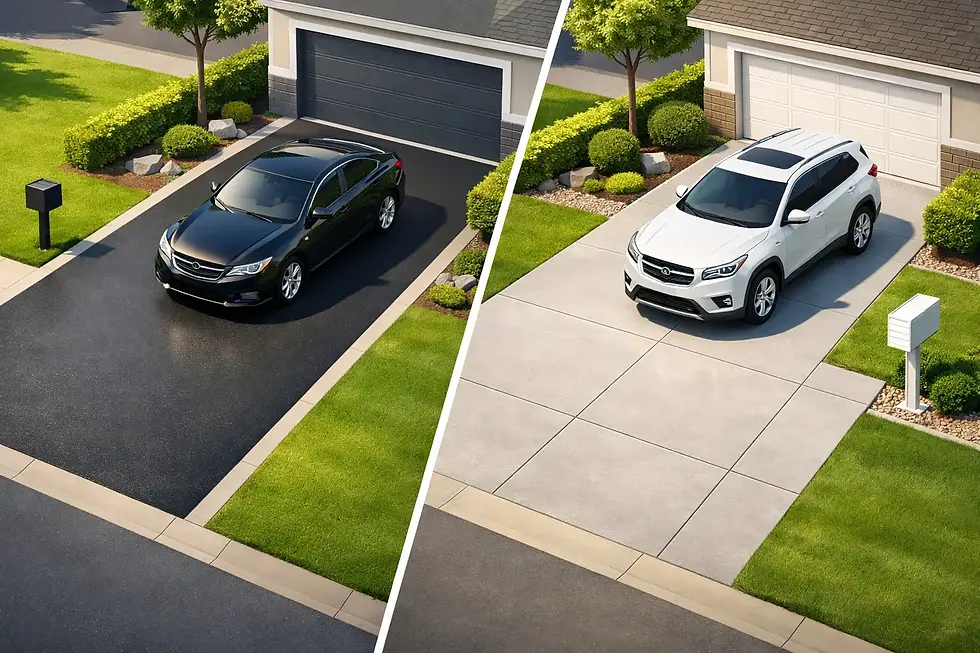
Asphalt continues to fit that need because it offers a clean appearance and can be maintained through sealcoating and timely repairs. For many homes and commercial properties, it is the most practical surface to install and maintain over time. It also tends to pair well with modern curb appeal updates because of its dark, uniform finish.
That said, decorative features still need realistic planning. Pavers add visual value, but they should be installed where they make sense. High-impact accent areas are usually easier to maintain than full surfaces, especially in drive lanes that take frequent traffic. The best result often comes from combining materials instead of asking one material to do everything.
Wider driveways and better usability are part of the trend
A lot of design conversations now start with function. Can two vehicles pass comfortably? Is there enough room to back out safely? Does the driveway support guests, work trucks, or extra parking without tearing up the lawn?
That is why wider layouts are becoming more common. In many cases, owners are not trying to make the driveway look bigger. They are trying to make daily use easier. A modest width increase can improve convenience, protect landscaping, and make the front of the property feel less cramped.
This is especially relevant for families with multiple drivers, vacation properties with regular turnover, and commercial sites where access matters. A driveway should support the way the property is actually used. If the layout forces awkward parking or repeated edge wear, it is not a strong design no matter how attractive it looks from the street.
Color contrast and texture are being used carefully
Bold color choices are not leading the market here. Most property owners still want classic, clean-looking surfaces that fit the neighborhood and age well. Where color and texture come in is through contrast.
A dark asphalt field with a lighter paver border is a good example. So is a smooth main drive paired with textured accents near the entrance. These details help define the space without making it feel overly decorative. They also tend to hold their appeal longer because they are subtle.
That is an important point with trends in general. The goal should not be to chase something that will look dated in a few years. It should be to choose details that give the property a finished look while still feeling timeless.
What matters most in driveway design trends for Delmarva properties
Regional conditions always matter more than social media inspiration. Near the coast, sun exposure, moisture, traffic load, and drainage all affect what will work. A trend that fits a dry inland property may not perform the same way in a beach community.
That is why the strongest projects start with the basics. Surface condition, base preparation, grading, material choice, and edge support all need to be right before decorative details are added. A driveway that is built well and designed with the site in mind will almost always look better over time than one that focused only on appearance.
For local property owners, the smart move is to think in layers. Start with how the driveway needs to function. Then consider how to improve the look through shape, borders, transitions, and material combinations. O.C. Paving works with customers on exactly that kind of practical planning, where the finished result has to look good and hold up in real conditions.
The best driveway trend is not a specific pattern or finish. It is the move toward smarter, better-balanced projects that respect the property, the climate, and the way people actually use the space. If your driveway upgrade does those three things well, it will still look like a good decision long after trends shift again.


Comments