

Driveway Paving That Holds Up Over Time
- nettiedrown
- May 13
- 6 min read
A driveway usually gets attention when something has already gone wrong. Water starts pooling near the garage, edges begin to crumble, or the surface looks worn enough to pull down the whole front of the property. That is why driveway paving is not just about making a home look cleaner. It is about building a surface that handles traffic, weather, drainage, and daily use without turning into a recurring repair job.
For homeowners and property managers across coastal Maryland and Delaware, that matters even more. Freeze-thaw cycles, summer heat, salt air, heavy rain, and regular vehicle traffic all put pressure on paved surfaces. A driveway that looks fine at installation but was rushed or built on a weak base may not stay that way for long.
What good driveway paving actually involves
From the street, a driveway can look simple. Underneath, a lot has to go right for it to perform well. The shape of the area, the condition of the base, how water moves across the property, and the thickness of the installed material all affect how long the finished surface will last.
That is one reason price alone rarely tells the full story. Two quotes can look similar on paper while covering very different scopes of work. One may include proper grading and base preparation, while another may be little more than a surface layer placed over existing problems. The lower number can be tempting, but it often becomes more expensive once cracks, soft spots, or drainage issues show up early.
A dependable paving job starts with evaluating the site as it is, not as anyone hopes it to be. If the sub-base is unstable, if water has nowhere to go, or if the old surface has failed in multiple areas, those issues need to be addressed before new asphalt goes down.
New driveway paving vs resurfacing
Not every project needs a full tear-out and replacement. In some cases, resurfacing is a practical option. In others, it only hides damage for a short time.
When a new driveway makes sense
A full replacement is usually the better choice when the driveway has widespread cracking, base failure, drainage problems, or areas that have sunk and shifted. If the foundation under the asphalt is no longer reliable, a new top layer will not solve the real problem. It may look better at first, but the same trouble often comes back through the new surface.
This is also true when the current layout no longer fits how the property is used. Some homeowners want a wider driveway, a cleaner entrance, or a more finished look that works better with the house and surrounding hardscape.
When resurfacing can be the right fit
Resurfacing works best when the existing driveway is still structurally sound but showing age on the surface. Minor cracking, fading, or shallow wear can often be corrected with an overlay if the base remains stable. It is a good middle-ground option for extending service life and improving appearance without the cost of a full rebuild.
The key is honesty about the condition underneath. If resurfacing is used where replacement is really needed, it becomes a short-term cosmetic fix.
Why the base matters more than most people realize
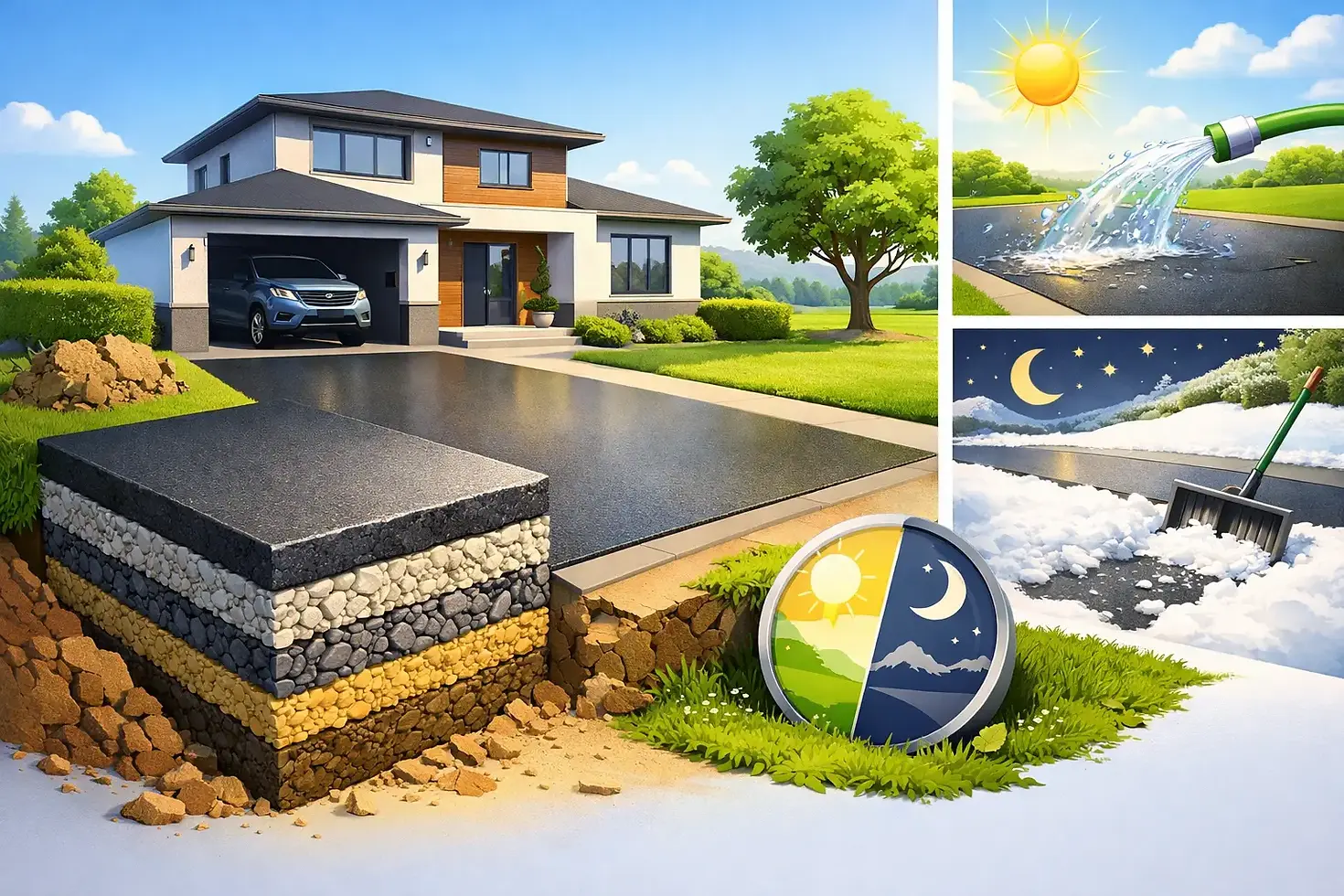
The finished asphalt gets the attention, but the base does the heavy lifting. A driveway is only as strong as what is underneath it. If the soil is soft, the stone base is too thin, or compaction is poor, the surface above it is more likely to crack, rut, or settle.
In coastal areas, moisture control is a major part of that equation. Saturated ground can shift over time, especially if drainage is weak. That is why grading and runoff planning are part of quality work, not extra details. Water should move away from the paved area in a controlled way. If it sits on top or works its way underneath, the driveway will wear out faster.
For many properties, that means the best paving solution is not the one that goes down fastest. It is the one that takes site conditions seriously from the start.
Driveway paving and curb appeal
A well-paved driveway changes how a property feels before anyone even gets to the front door. It gives the exterior a cleaner, more finished look and helps the home feel maintained. That matters if you plan to stay for years, and it matters if resale value is part of the conversation.
Still, appearance should not be separated from function. The best-looking driveway is one that also drains properly, supports vehicle weight, and fits the layout of the lot. Clean edges, smooth transitions, and a consistent finish all make a visual difference, but so does practical design.
Some property owners also want to combine asphalt with brick paver borders, walkways, or apron details. That can add character and definition, especially at entrances or alongside landscaping. It works best when the decorative elements are planned as part of the whole project rather than added as an afterthought.
What affects how long a paved driveway lasts
No driveway lasts forever, but good installation and reasonable maintenance can make a major difference in lifespan. Traffic volume matters. A residential driveway used by standard passenger vehicles will wear differently than one that regularly carries work trucks, trailers, or delivery vehicles.
Weather exposure also matters. Direct sun, standing water, winter freezing, and salt can all wear down asphalt over time. Even tree roots near the edge of the driveway can create movement and cracking if they are not accounted for.
Then there is maintenance. Sealcoating at the right interval helps protect the surface from oxidation, moisture, and everyday wear. Small cracks addressed early are easier and less costly to manage than widespread deterioration left untreated for years.
That is where working with an experienced local contractor can make a real difference. A company familiar with Delmarva conditions is more likely to recommend a paving approach that matches the climate, soil, and property use instead of applying the same formula everywhere.
Signs it is time to act
Some driveway issues are obvious. Others tend to get put off until the job becomes larger than it needed to be. If water is ponding after rain, if cracks are multiplying across the surface, or if the edges are breaking away, the driveway is already sending a message.
Fading color by itself is not always urgent, but fading combined with rough texture, loose aggregate, and visible cracking often points to aging asphalt that needs attention. Sinking near parked vehicles, rough transitions at the garage, and recurring patch repairs are also signs that it is time for a more careful evaluation.
Waiting can make sense in a few situations, especially if the surface wear is minor and the base is holding up well. But once moisture gets into open cracks and weak spots, deterioration usually accelerates.
Choosing a contractor for driveway paving
Most property owners are not looking to become paving experts. They want clear guidance, realistic expectations, and a finished result that holds up. That makes communication just as important as equipment.
A good contractor should be able to explain whether the job calls for repair, resurfacing, or replacement and why. They should talk through drainage, base preparation, and how the project fits the property instead of offering a one-size-fits-all answer. Free estimates are helpful, but the real value is in getting a scope that reflects the actual condition of the site.
For local customers, regional experience matters too. Conditions in Ocean City, Ocean Pines, Ocean View, Dagsboro, and nearby communities are not identical to inland markets. Moisture, salt exposure, seasonal swings, and lot configurations all influence what works best. That practical local knowledge is part of what homeowners and commercial clients look for when they call O.C. Paving.
A practical investment, not just a cosmetic one
Driveway paving is one of those improvements that people notice right away, but its real value shows up over time. A properly built driveway supports daily use, helps protect the surrounding property from drainage issues, and keeps maintenance more manageable year after year.
If your driveway is showing wear, the smartest next step is not guessing whether it needs a patch, an overlay, or a full replacement. It is getting a clear assessment from a contractor who will look at the whole surface, explain the trade-offs, and recommend work that makes sense for how your property is actually used.


Comments