

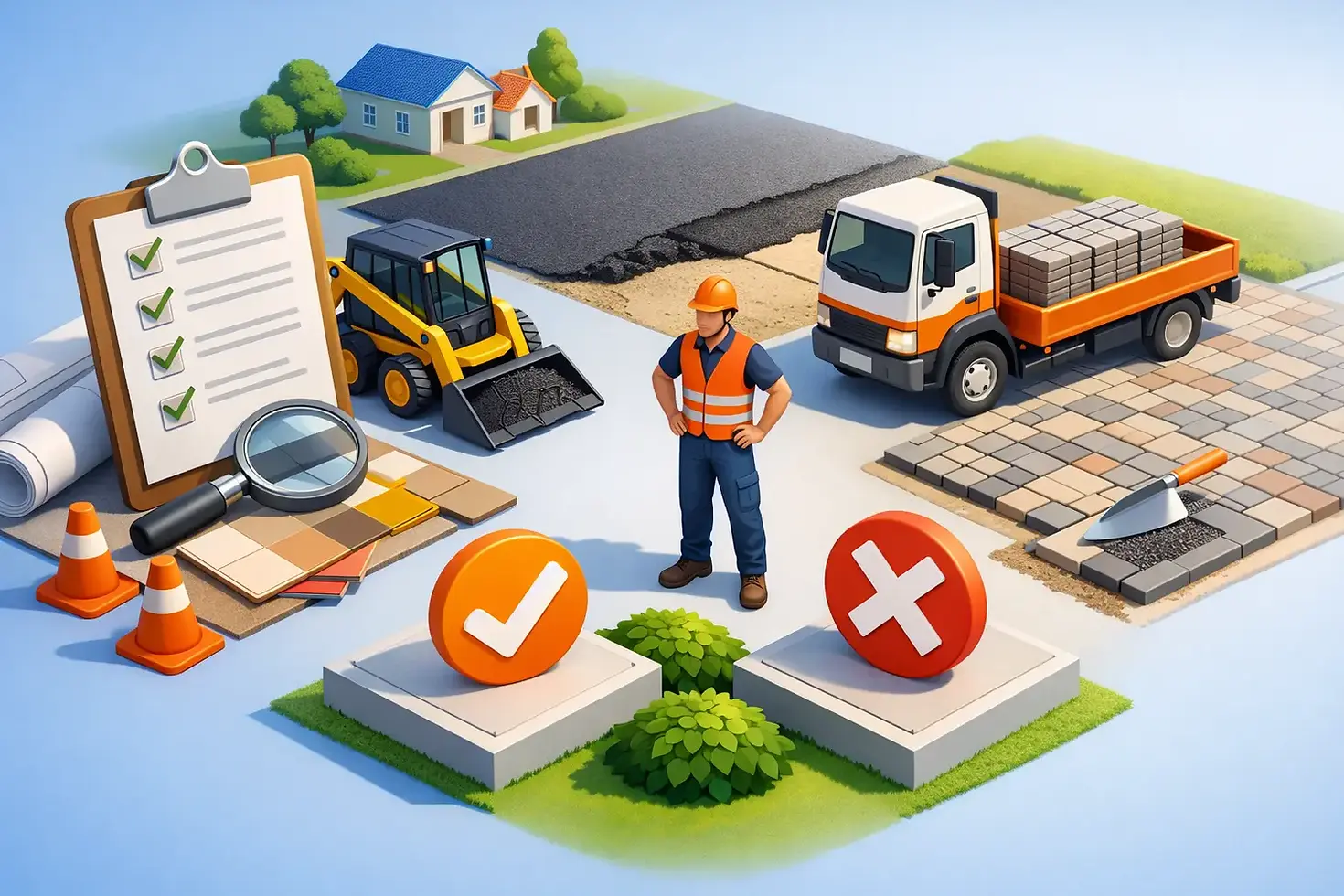
How to Choose a Paving Contractor
- nettiedrown
- May 9
- 6 min read
A paving job usually looks simple from the street. Then the estimates start coming in, one contractor says you need full replacement, another says resurfacing will do, and a third gives you a price that seems almost too good to pass up. That is usually the moment people start asking how to choose paving contractor services without wasting money or ending up with work that fails early.
The right choice is not always the lowest bid, and it is not always the biggest company either. A good paving contractor should be able to explain what your surface needs, why that solution makes sense, and what kind of result you should realistically expect. Whether you are planning a new driveway, improving a parking lot, or adding brick pavers to improve curb appeal, the decision comes down to trust backed by proof.
How to choose paving contractor bids the smart way
The estimate tells you more than the price. It shows how the contractor thinks about the project.
A reliable contractor should look at the actual site, ask questions about traffic, drainage, age of the surface, and your goals for the property. If someone gives you a quote with little to no inspection, that is a warning sign. Asphalt and hardscape work depend on base condition, grading, water flow, edge support, and usage. Two driveways can look similar and need completely different solutions.
When you compare bids, look for details. Does the proposal explain whether the job is new installation, resurfacing, patching, sealcoating, or repair? Does it mention surface preparation, thickness, grading, or cleanup? If one estimate is much lower than the others, there is usually a reason. Sometimes that reason is lower quality material. Sometimes it is less prep work. Sometimes key steps were left out of the proposal entirely.
A clear bid is often a sign of a clear process. That matters because paving projects move quickly once work begins, and confusion at the estimate stage usually gets worse, not better.
Look for local experience, not just general contracting experience
Paving in coastal Maryland and Delaware comes with its own conditions. Freeze-thaw cycles, heavy summer traffic, drainage issues, salt exposure, and sandy soil can all affect how a surface performs over time. That is why local experience matters.
A contractor who works regularly in your area is more likely to understand what holds up well and what tends to fail. They should also be familiar with the expectations of homeowners, property managers, and business owners in local communities where appearance and durability both matter.
This does not mean a newer company cannot do good work. It means you should ask better questions. How long have they handled paving projects in this region? What types of jobs do they do most often? Are they comfortable with both residential and commercial work, or are they stretching beyond their usual scope? A contractor who mainly sealcoats small driveways may not be the right fit for a busy retail lot. On the other hand, a company built around large commercial work may not be the best at design-focused paver details around a home.
The best fit is usually a contractor whose day-to-day work looks a lot like your project.
Ask what solution they recommend and why
This is one of the fastest ways to separate experienced contractors from sales-driven ones.
If your asphalt is worn but structurally sound, resurfacing might make sense. If the base has failed, drainage is poor, or widespread cracking runs deep, replacement may be the better long-term choice. If the issue is mostly appearance and surface oxidation, sealcoating may be enough for now. There is no single answer that fits every property.
A dependable contractor should be comfortable explaining the trade-offs. Resurfacing can cost less than replacement, but it will not fix serious base problems. Sealcoating improves appearance and adds protection, but it is not a repair method for damaged asphalt. Brick pavers look great and can add character, but they require a proper base and thoughtful layout to stay attractive over time.
If the explanation feels rushed or overly vague, keep looking.
Check proof of work, not just promises
Most contractors say they do quality work. What matters is whether they can show it.
Ask to see photos of completed projects similar to yours. If you own a home, look for driveways, walkways, and decorative hardscape work. If you manage a commercial site, ask about parking areas, entrances, access lanes, and maintenance projects. The goal is not to find the fanciest job. It is to see consistency, neat edges, clean transitions, and finished surfaces that look professionally planned.
Reviews can help too, but read them with some common sense. A few short positive reviews are fine, but detailed feedback is more useful. Look for comments about communication, reliability, cleanup, scheduling, and whether the finished work held up over time. A contractor may not have a perfect record, but patterns matter. If multiple people mention missed calls, delays without updates, or sloppy finishing, pay attention.
For many property owners, this is the point where a local name stands out. Contractors with an established presence in the region have more to lose by doing poor work, and that accountability often shows in how they manage jobs and customer relationships.
Make sure communication is steady from the start
Good paving work is practical, but the customer experience matters too. You should know who is handling your estimate, who will be on site, what the timeline looks like, and how weather or change requests will be handled.
A contractor does not need to overwhelm you with technical language. In fact, plain answers are usually better. You want someone who can explain the job clearly, answer questions without irritation, and keep you informed if plans shift.
That is especially important for commercial properties and multi-unit sites, where paving work may affect traffic flow, tenants, deliveries, or customer access. Even for a residential driveway, poor communication can create unnecessary stress if you are not sure when equipment is arriving or how long the surface needs to cure.
If a company is hard to reach before you sign, do not expect that to improve once the job starts.
Ask about scheduling and site preparation
A professional contractor should be direct about timing. Some jobs can be completed quickly, but proper scheduling still matters. Weather, material availability, traffic needs, and curing time all affect the process.
You should also ask what prep is required on your end. Do vehicles need to be moved the night before? Will access be limited for a day or two? Are there drainage concerns, low spots, or edge conditions that need to be addressed before paving begins? These details may seem small, but they shape how smoothly the project goes.
Preparation is also where shortcuts often happen. A surface may look fine right after installation, but if grading, compaction, or base repair were skipped, problems can show up much sooner than expected.
Know what makes a low price risky
Everyone wants fair pricing. That is reasonable. But with paving, the cheapest quote can become the most expensive outcome.
A lower number may reflect thinner asphalt, weaker prep, rushed labor, or a short-term fix sold as a long-term answer. That does not mean the highest bid is automatically best either. Sometimes you are paying for overhead, not better workmanship. What you want is value - a price that matches the scope, materials, and expected lifespan of the work.
It helps to ask what is included and what is not. Will damaged areas be patched first? Is grading part of the job? What kind of finish should you expect? If there is a cleanup plan and a clear scope in writing, you are in a stronger position to compare contractors fairly.
This is where homeowners and property managers often benefit from choosing a contractor who is practical rather than flashy. Straightforward recommendations, realistic timelines, and clearly defined work tend to lead to better outcomes than aggressive sales tactics.
How to choose paving contractor services for long-term results
A paving surface is not just something you look at. It is something you drive on, walk on, maintain, and depend on every day. That is why the best contractor is usually the one who thinks beyond installation day.
Ask how to protect the finished surface. Ask when sealcoating makes sense, how to handle early wear, and what kind of maintenance schedule fits your property. A contractor focused on long-term results will not just complete the project and disappear. They will help you understand how to get more life from the investment.
That local, service-minded approach is one reason many property owners across Delmarva look for a contractor with both residential and commercial experience, practical guidance, and a track record in the communities they serve. Companies such as O.C. Paving have built trust that way - by staying responsive, tailoring solutions to the site, and keeping the process clear.
The real test is simple. Choose the contractor who listens carefully, explains the work honestly, and gives you confidence that the finished surface will make sense for your property a year from now, not just the day the crew pulls away.


Comments