

Top Signs Asphalt Is Failing
- nettiedrown
- Apr 29
- 6 min read
A driveway or parking lot usually does not fail all at once. It starts with small changes that are easy to ignore - a crack near the edge, a low spot that holds water, a surface that looks more gray than black. The top signs asphalt is failing often show up months or even years before a major repair becomes necessary.
For property owners across the Delmarva region, catching those signs early can save money and prevent bigger problems. Coastal weather, moisture, traffic, and sun exposure all work against asphalt over time. The key is knowing the difference between normal aging and damage that means your pavement needs attention.
Top Signs Asphalt Is Failing on Your Property
One of the first things people notice is cracking. Not every crack means the entire surface is done for, but the pattern and size matter. A few thin surface cracks can often be sealed and managed. Wider cracks, connected cracking, or repeated cracking in the same areas usually point to deeper issues below the surface.
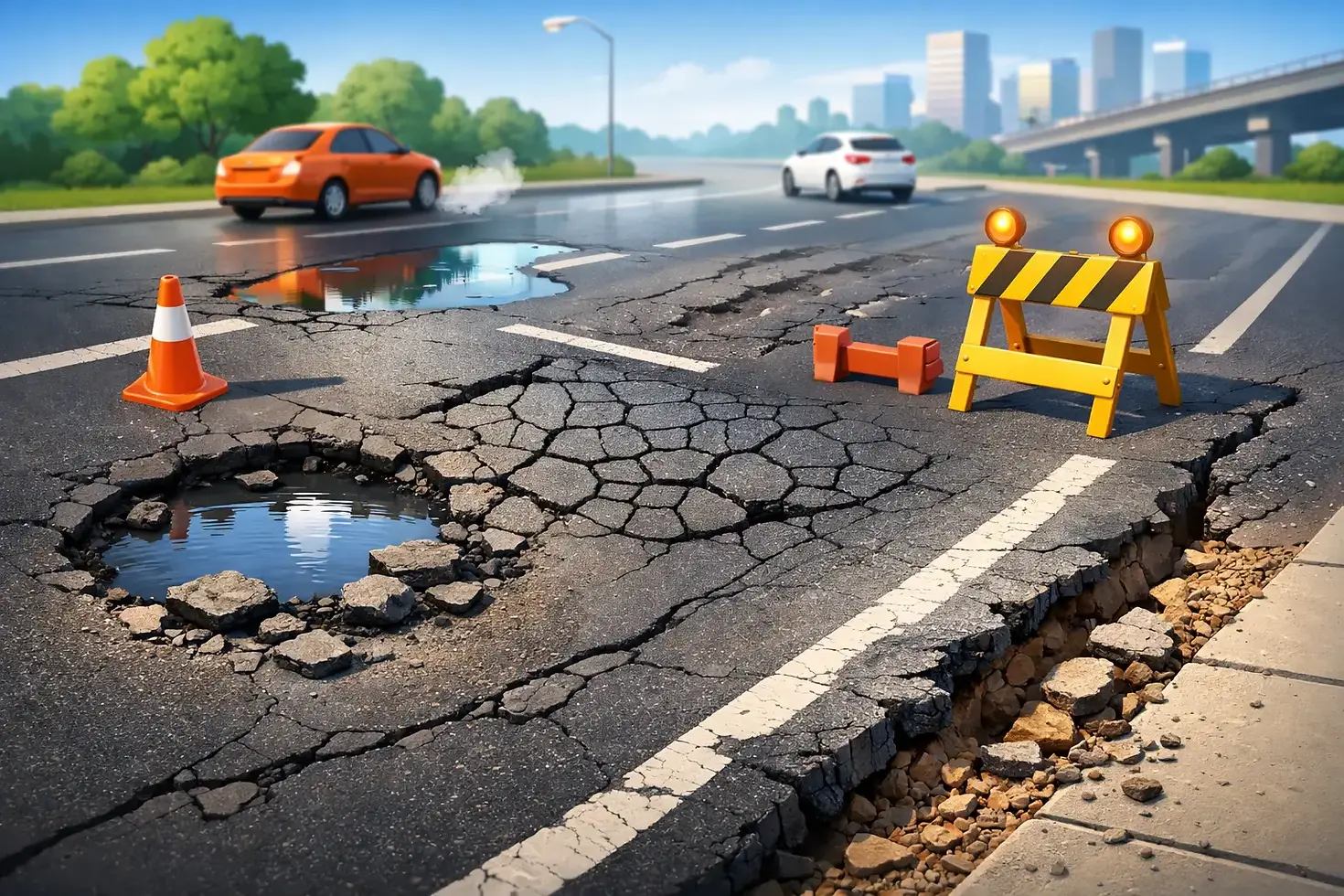
If you see alligator cracking, that is one of the clearest warning signs. This looks like a network of small cracks linked together in a pattern similar to scales. It often means the asphalt is no longer strong enough to handle traffic or that the base underneath is weakening. In a residential driveway, this might happen where vehicles turn or park most often. In a commercial lot, it commonly shows up in travel lanes, loading areas, or entrances with heavier use.
Another common sign is potholes. A pothole does not just appear because the top layer got old. It usually forms after water gets into cracks, weakens the base, and repeated traffic breaks the area apart. Once that happens, patching may help in the short term, but it is worth asking why the asphalt failed there in the first place. If potholes keep returning, the problem is often deeper than the surface.
Fading is also worth paying attention to. Fresh asphalt has a rich black finish, but as it ages and oxidizes, it turns gray. On its own, color change is expected. What matters is what comes with it. If the pavement is faded, dry-looking, and beginning to feel brittle, that often means the binder oils are wearing down. At that stage, asphalt becomes more likely to crack and break apart under traffic and weather.
When Surface Wear Becomes Structural Trouble
Some damage is mostly cosmetic at first. Other damage tells you the pavement structure is starting to fail. The challenge is that they can look similar to a property owner standing a few feet away.
Raveling is a good example. This happens when the surface begins to lose small stones and fine particles. At first, it may just look rough or worn. Over time, the texture becomes uneven, loose aggregate appears, and the asphalt loses thickness. In coastal communities where sun, salt air, and moisture all play a role, raveling can speed up if the surface has not been protected. A sealcoating plan can help slow this process, but once the wear is advanced, resurfacing may be the better option.
Edge breakdown is another sign people often miss. The outer edges of a driveway or parking area may start crumbling, cracking, or sinking before the middle sections show major damage. This can happen when there is not enough support along the sides, when water is washing away material, or when vehicles regularly drive too close to the edge. If left alone, the damaged area grows inward and turns a minor repair into a larger project.
Depressions and low spots should also be taken seriously. If water sits in the same place after every rain, the asphalt may have settled or the base may be compromised. Ponding water is more than an appearance issue. Standing water shortens pavement life by seeping into weak areas, increasing freeze-thaw stress in colder months, and speeding surface deterioration.
Drainage Problems Are a Major Warning Sign
In many failing asphalt projects, drainage is part of the story. Water is one of the biggest reasons asphalt breaks down early. Even well-installed pavement will struggle if runoff has nowhere to go or if water is consistently reaching the base below.
If your driveway or lot has puddles that stay long after a storm, water running toward buildings, or soggy ground at the pavement edge, those are signs that the surface may no longer be draining as intended. Sometimes the fix is localized and straightforward. Other times, drainage issues are tied to grading, settling, or a worn-out asphalt layer that cannot be corrected with minor patching alone.
This is where a professional assessment matters. Two surfaces can show the same pooling water, but one may need a targeted repair while the other needs resurfacing or reconstruction. It depends on the age of the asphalt, the condition of the base, traffic levels, and how widespread the issue is.
Signs Asphalt Is Failing Below the Surface
Some of the most important problems are not obvious until they affect how the pavement feels underfoot or under tires. If asphalt looks uneven, bounces slightly, shifts, or feels soft in warm weather, the support underneath may be failing. That is especially common in areas with poor drainage, heavy vehicle loads, or older pavement that has been patched repeatedly over time.
You may also notice tire marks, rutting, or sunken lanes where vehicles travel most often. This can mean the asphalt is deforming under pressure. In a residential setting, it may show up near the garage, along a turnaround, or where delivery trucks stop. In a commercial setting, it often points to load-related stress that the surface was not built to handle anymore.
Repairs can still be possible at this stage, but they need to match the real cause. Covering over a weak area without addressing the underlying problem usually leads to the same failure showing up again.
Repair, Resurface, or Replace?
Once you spot the top signs asphalt is failing, the next question is what to do about it. There is no one-size-fits-all answer.
If the damage is limited - for example, a few cracks, minor surface wear, or early fading - maintenance may be enough. Crack filling, sealcoating, and small repairs can extend the life of the pavement and improve appearance.
If the surface has widespread wear but the base is still sound, resurfacing can often make sense. This gives you a new top layer without full replacement. It is a practical option when the asphalt is aging across the whole area but has not completely broken down underneath.
If there are major potholes, alligator cracking, drainage failure, soft spots, or recurring repairs in the same locations, replacement may be the better long-term investment. Full replacement costs more upfront, but it can prevent the cycle of repeated patching that adds up over time.
For many property owners, the right choice comes down to timing. Waiting too long can move a project from maintenance into reconstruction. Acting too early can mean spending more than necessary. A local contractor who understands regional weather, soil conditions, and traffic needs can help you make the right call based on what is actually happening on your site.
What Delmarva Property Owners Should Watch Closely
In beach and coastal communities, asphalt faces extra stress. Moisture, heat, salt air, and seasonal traffic all affect how a surface ages. That is why routine visual checks matter. You do not need technical training to notice cracks spreading, water collecting, edges breaking down, or rough spots getting worse.
Homeowners should pay close attention to driveways that are starting to look uneven or washed out near the edges. Property managers and business owners should watch entrance lanes, parking stalls, and loading areas where wear tends to show first. If the pavement no longer looks uniform, drains poorly, or feels less stable than it used to, it is worth having it looked at before the damage spreads.
At O.C. Paving, we have seen how quickly a manageable asphalt issue can become a larger repair when it is left through another season of weather and traffic. The good news is that early action gives you more options.
If your pavement is showing signs of age, do not wait for a pothole to make the decision for you. A clear evaluation now can help you protect the surface, improve appearance, and plan the next step with confidence.


Comments