


12 Paver Walkway Ideas That Add Curb Appeal
- nettiedrown
- Jun 22
- 6 min read
A walkway does more than get people from the driveway to the front door. It shapes the first impression of the property, handles daily foot traffic, and in coastal areas, it needs to stand up to weather, sand, and moisture without looking tired after one season. That is why good paver walkway ideas start with both appearance and performance.
For homeowners, the right walkway can make an entry feel cleaner, more finished, and easier to maintain. For property managers and business owners, it can improve traffic flow and make outdoor spaces look more cared for. The best results usually come from choosing a design that fits the property instead of chasing a trend that looks good in a photo but does not make sense on-site.
Paver walkway ideas that work in real properties
Some walkway designs look great on paper but become a hassle once they meet drainage issues, uneven grades, or heavy use. In Delmarva communities, especially near the coast, it helps to think practically. A walkway should complement the home or building, allow water to move properly, and hold its shape over time.
Straight walkways are one of the most dependable choices. They make sense when you want a clean, direct path from the driveway, parking area, or sidewalk to an entrance. This layout is especially useful for commercial properties, rentals, and homes with a more formal front elevation. It looks organized and tends to be cost-effective because the cuts and layout are simpler.
Curved walkways create a softer look and can help a property feel more inviting. They work well when landscaping is part of the design or when the front yard has room to guide visitors through the space. A curve can also help a walkway fit around beds, trees, or existing hardscape. The trade-off is that curved layouts usually require more planning and labor, so they may cost more than a basic straight run.
A wide front entry walkway gives a property a more substantial, welcoming appearance. This is a strong option for homes with larger facades or for commercial entrances that need to accommodate heavier foot traffic. Narrow paths can work for garden access or side-yard transitions, but the main front walkway should feel comfortable, not squeezed in as an afterthought.
Choosing a pattern that fits the property
Pattern changes the personality of a walkway quickly. The same paver can look traditional, modern, or more decorative depending on how it is laid.
Running bond is one of the simplest and most versatile patterns. It gives a neat, linear look that works well on classic homes, beach properties, and many small commercial sites. It is a practical choice if you want something timeless and easy to coordinate with existing paving.
Herringbone adds more movement and visual interest. It is often chosen for areas where durability matters because the interlocking pattern helps create a strong surface. If a walkway connects to a driveway apron, patio, or other hard-use area, herringbone can be a smart choice both visually and structurally.
Basket weave has a more traditional, old-style appearance. It can look great on cottage-style homes, older properties, or projects where you want the walkway to feel established rather than sharply modern. The downside is that it is more style-specific, so it will not fit every property.
Modular and mixed-size paver layouts offer a more customized look. These patterns can feel upscale without being flashy, especially when paired with neutral color tones. For larger homes or higher-visibility commercial spaces, this approach can add interest without making the walkway too busy.
Border details that make a walkway look finished
One of the most effective paver walkway ideas is also one of the simplest - add a border. Borders create definition, make the walkway stand out from surrounding grass or stone, and give the installation a more intentional appearance.
A contrasting border color is a common choice because it frames the walkway clearly. For example, a lighter field paver with a darker soldier course border can add structure without overcomplicating the design. This works especially well in front yards where you want curb appeal from the street.
A matching border in a different laying pattern is more subtle. It keeps the color palette calm while still adding detail. This can be the better option if the property already has strong visual elements and the walkway needs to support the overall look rather than compete with it.
For commercial properties, borders can also help direct foot traffic. A defined edge makes the path easier to read, especially around entrances, landscaped islands, or transitions from parking areas.
Color choices for coastal and inland settings
Color matters, but not just for looks. Lighter pavers often stay cooler in the sun, which can be a benefit during hot summer months. They also tend to suit beach-area homes well because they reflect the softer tones common in coastal architecture.
Gray, tan, buff, and blended earth tones are reliable options. They hide dust and minor debris reasonably well and usually coordinate with a wide range of siding, roofing, and landscape materials. If the goal is broad, lasting appeal, these are hard to beat.
Darker pavers can create a bold, clean look, especially on modern homes or commercial buildings. They can also show salt residue, sand, and fading differently over time, so maintenance expectations should be part of the decision. In some cases, a darker border with a medium-tone field gives you the best balance.
Multi-tone blends are often a smart choice for active properties because they disguise everyday wear better than a flat, uniform color. If you have kids, pets, guests, tenants, or customer traffic coming through regularly, that practical advantage matters.
Ideas that connect the walkway to the rest of the property
The strongest walkway designs rarely stand alone. They usually relate to the driveway, patio, pool area, or front steps so the property feels cohesive.
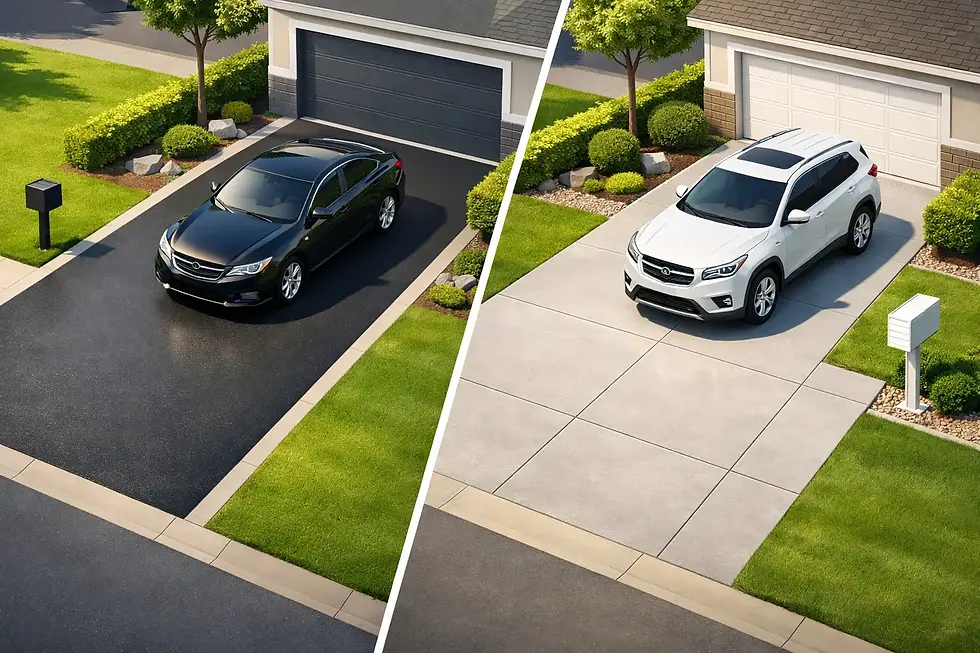
If you already have asphalt paving, a paver walkway can add contrast and upgrade the overall appearance without requiring a full site redesign. This is common on residential properties where the driveway is functional asphalt but the owner wants a more decorative front approach. The combination can look sharp when the walkway and entry area are sized correctly and tied into the surrounding layout.
For homes with front porches or patios, carrying similar paver tones into both areas creates continuity. That does not mean every surface has to match exactly. In many cases, complementary materials work better than identical ones.
At multi-unit properties or businesses, a walkway should support how people actually move through the site. That may mean connecting parking areas to entrances in the shortest practical route, widening sections near doors, or adding a clear transition where pedestrians cross vehicle areas. Good design here is not just decorative. It helps the site function better.
Practical upgrades worth considering
Lighting along a paver walkway improves both appearance and safety. Low-profile fixtures can help define the path at night without making the property feel overlit. This is especially useful for vacation homes, rental properties, and commercial entries where visibility matters.
Built-in step transitions are worth planning early if the grade changes from one area to another. Trying to force a walkway through a slope without addressing elevation usually leads to awkward results. A few well-designed steps or terraced sections often look better and feel safer.
Edge restraint and base preparation are not the exciting parts of a walkway project, but they are what keep the surface stable. The design can be excellent, but if the installation underneath is not right, the walkway will not perform the way it should. That is one reason professional planning matters, especially in areas affected by freeze-thaw cycles, shifting soils, and drainage challenges.
How to choose the right walkway idea for your property
The best choice depends on how the walkway will be used, what style the property already has, and how much maintenance you want to deal with. A decorative pattern with multiple colors may look impressive, but a simpler layout is often the better long-term fit for busy households or commercial sites.
It also helps to think about scale. Large-format pavers can overwhelm a small front yard, while tiny units may look too busy on a wide approach to a commercial building. Proportion matters just as much as color or pattern.
Budget should be part of the conversation from the start, not at the end. Straight layouts, standard colors, and simpler patterns tend to be more cost-conscious. Curves, intricate borders, and mixed-size patterns can add value visually, but they also add labor and material complexity. Neither approach is wrong. It just depends on the goals for the property.
For local property owners, the smartest paver walkway ideas are the ones that look right, drain well, and hold up through changing seasons. O.C. Paving works with homeowners and businesses across the region on practical surface improvements that are built around real property needs, not one-size-fits-all designs.
If you are planning a new walkway, start with the path people actually use, then build the design around that. A walkway should feel natural underfoot, fit the property, and keep looking good long after the install day is over.


Comments