


Best Surface for Commercial Parking Area?
- nettiedrown
- Jun 22
- 6 min read
A parking lot usually gets noticed only when something goes wrong. Potholes, standing water, loose stone at the entrance, faded striping, or a surface that looks worn before its time all send the same message to customers and tenants - this property is being neglected. If you are trying to choose the best surface for commercial parking area use, the right answer depends on how the lot will be used, what kind of traffic it sees, and how much ongoing maintenance you are prepared to handle.
For most retail centers, office buildings, apartment communities, churches, and small to mid-sized commercial properties, asphalt is the practical first choice. It offers a clean appearance, handles vehicle traffic well, and can be maintained without replacing the entire lot every time wear starts to show. That said, asphalt is not the only option, and it is not the best fit for every site.
What makes the best surface for commercial parking area use?
The surface itself matters, but so do the conditions around it. A parking area near the coast in Maryland or Delaware has to deal with heat, rain, freeze-thaw cycles, and in some locations salt exposure. A small office lot has different needs than a busy shopping center with delivery trucks moving through every day.
The best choice usually comes down to five factors: traffic volume, vehicle weight, drainage, appearance, and life-cycle cost. Upfront price is important, but it should not be the only deciding factor. A less expensive surface can become more costly if it breaks down early or needs frequent repairs.
A well-built parking area also depends on what is underneath the finished surface. Base preparation, grading, compaction, and water management all affect performance. Even a good material will struggle if it is installed over a weak foundation.
Asphalt: the standard choice for most commercial lots
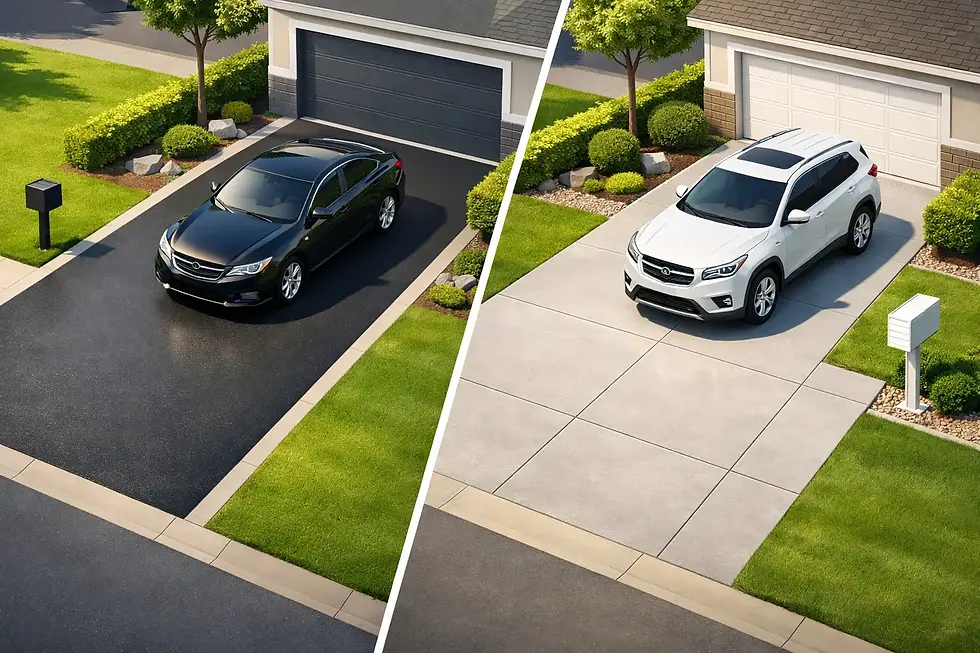
Asphalt is often the best balance of cost, performance, appearance, and repairability. That is why it is commonly used for commercial parking areas across the Delmarva region. It creates a smooth, dark finish that looks professional and makes striping easy to see.
For many property owners, the biggest advantage is flexibility. Asphalt handles daily vehicle traffic well, and when wear develops over time, repairs can often be made in sections. Crack filling, patching, sealcoating, and resurfacing can extend the life of the lot without a full reconstruction.
Asphalt is also generally quicker to install than concrete, which can matter for businesses that need to limit downtime. In active commercial settings, that timing can affect tenants, customers, and day-to-day operations.
Still, asphalt does require maintenance. Sun exposure, water infiltration, heavy turning traffic, and neglected cracks can shorten its life. It performs best when property owners stay ahead of repairs instead of waiting until the surface has widespread failure.
When asphalt is the best fit
Asphalt works especially well for retail parking lots, office buildings, hospitality properties, apartment complexes, and mixed-use sites with regular passenger vehicle traffic. It is also a strong option when appearance matters but the budget needs to stay realistic.
If your lot sees occasional service vehicles or delivery trucks, asphalt can still perform very well when the pavement section is designed for that load. The key is not just choosing asphalt, but choosing the right thickness and base structure for the job.
Concrete: strong, clean, and higher cost
Concrete is known for durability, especially under heavy loads. It is often used in industrial yards, loading zones, dumpster pads, and areas where trucks make repeated stops or tight turns. In those situations, concrete can outlast asphalt and resist deformation better.
It also has a clean, bright appearance that some commercial property owners prefer. But concrete usually comes with a higher upfront cost, and repairs can be more involved. When damage happens, patched sections often stand out visually, and replacement work may take longer to complete.
For a full commercial parking lot, concrete is often chosen when long-term heavy-duty performance matters more than initial budget. For many standard customer parking areas, though, it can be more surface than the site really needs.
Where concrete makes more sense than asphalt
Concrete is often a smart choice in isolated high-stress areas rather than across the whole property. Entrance aprons, loading docks, cart return zones, and trash enclosure pads are common examples. Some sites benefit from a combination of asphalt for the main parking area and concrete in the toughest wear points.
That kind of mixed approach can control cost while improving durability where it matters most.
Gravel: low cost, but limited for commercial use
Gravel has a place on some rural or temporary sites, but it is rarely the best surface for commercial parking area projects where appearance, customer access, and long-term upkeep matter. It can be less expensive at the start, but gravel shifts, develops ruts, and creates dust and tracking issues.
For businesses that want a polished, easy-to-navigate parking area, gravel usually falls short. It can also make striping, accessibility planning, drainage control, and snow or storm cleanup more difficult. If the site serves frequent public traffic, gravel tends to create more maintenance and a less professional impression.
There are exceptions. Overflow parking, seasonal use areas, or low-traffic utility spaces may work with stone. But for most commercial properties, gravel is better seen as a short-term or secondary solution.
Pavers and decorative surfaces: best for specific areas
Brick pavers and other decorative hardscape materials can add a strong visual finish, but they are not usually the main surface for a full commercial parking lot. They are more commonly used in walkways, entrances, courtyards, or feature areas where design matters as much as function.
These surfaces can improve curb appeal and help define pedestrian spaces, but they cost more and require careful installation. In a full parking environment with steady vehicle traffic, decorative materials are usually best used selectively.
For some properties, especially hospitality or upscale mixed-use spaces, combining a practical parking surface with decorative accents creates the right balance of durability and appearance.
Drainage can matter more than the material
A parking lot can fail early even when the surface material is technically the right one. Poor drainage is one of the biggest reasons commercial lots break down. Water that sits on the surface or seeps into the base weakens the structure and leads to cracking, settlement, and potholes.
That is why slope, grading, catch basins, and proper runoff planning should be part of the conversation from the start. In coastal communities, stormwater control and weather exposure are not side issues. They are central to how well the lot will hold up.
If you are comparing surfaces and only looking at material type, you are missing a big part of the picture. A properly installed asphalt lot with solid drainage will usually outperform a poorly planned concrete or gravel lot.
The cost question: think beyond installation day
Every property owner asks about cost, and they should. But the better question is not just what the surface costs now. It is what it will cost to own over the next 10 to 20 years.
Asphalt usually has a lower initial cost than concrete and offers cost-effective maintenance options along the way. Concrete often costs more upfront but can make sense in high-load environments. Gravel can be cheap to install, yet ongoing grading, replenishment, and appearance issues can add up.
The best surface for commercial parking area decisions often comes down to value, not just price. A surface that fits your traffic, drains properly, and can be maintained in a predictable way tends to be the better investment.
So what should most commercial property owners choose?
For the majority of commercial parking areas, asphalt is the most practical choice. It gives property owners a professional-looking surface, solid performance, manageable repair options, and a reasonable overall cost. That is especially true for customer-facing properties where appearance and accessibility matter.
Concrete deserves serious consideration in heavy-load sections or specialized sites. Gravel is generally best reserved for limited-use areas. Decorative pavers work well as accents, not usually as the main parking surface.
A good contractor should not give the same answer for every property. Traffic patterns, drainage conditions, lot size, expected lifespan, and budget all need to be weighed together. In many cases, the right solution is not one material everywhere, but a surface plan tailored to how the property actually works.
For property owners and managers in coastal Maryland and Delaware, local conditions matter too. Heat, storms, salt air, and seasonal traffic can all affect how a parking area ages. Working with a contractor who understands those conditions helps you avoid one-size-fits-all recommendations. At O.C. Paving, that practical approach is what helps commercial clients choose surfaces that look right, perform well, and make sense for the long run.
If your parking area is starting to show wear or you are planning a new installation, the best next step is simple: match the surface to the way your property is really used, not just the lowest bid on paper.


Comments