


Driveway Resurfacing Before and After
- nettiedrown
- Jun 8
- 6 min read
A faded driveway does more than look tired. It can make the whole property feel neglected, even when the home or building itself is well kept. That is why driveway resurfacing before and after results get so much attention - the change is immediate, practical, and easy to see from the street.
For homeowners, property managers, and business owners around the Delmarva coast, that visual difference matters. But the real value is not just the darker, cleaner finish. A properly resurfaced asphalt driveway can also improve surface performance, address minor wear, and help extend the life of the pavement you already have.
What driveway resurfacing before and after really means
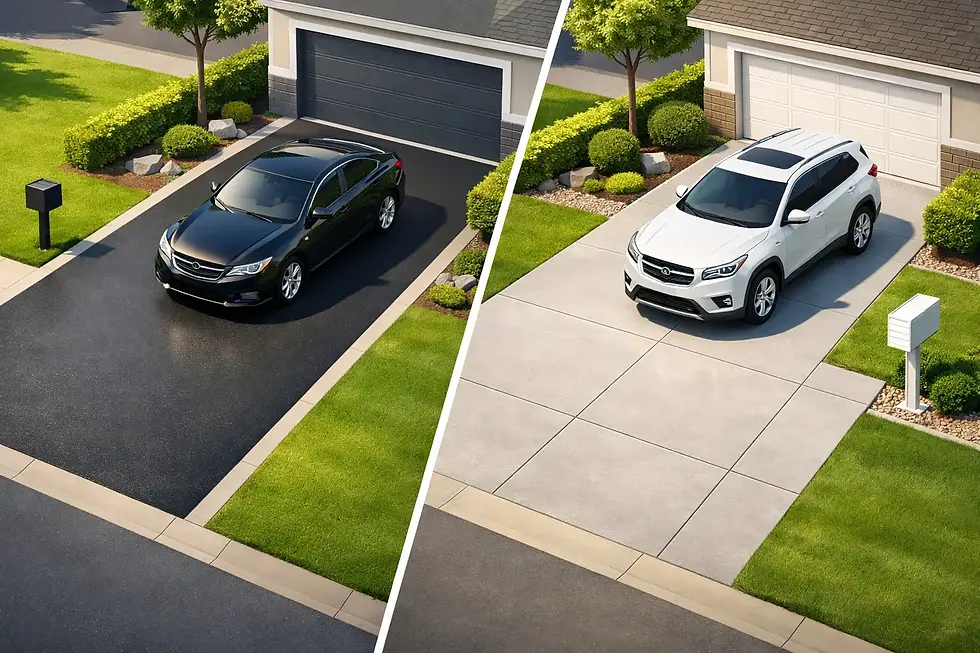
When people picture driveway resurfacing before and after, they often focus on color alone. The "before" is usually gray, weathered, cracked in spots, and uneven in appearance. The "after" is smooth, black, and freshly finished.
That visual upgrade is real, but resurfacing is more than a cosmetic touch-up. It typically involves placing a new layer of asphalt over an existing driveway that still has a stable base. If the underlying structure is in decent shape, resurfacing can restore both appearance and function without the cost of a full replacement.
This is where expectations matter. Resurfacing is not the answer for every driveway. If the pavement has widespread base failure, deep drainage problems, severe potholes, or major crumbling along the edges, putting a new surface on top may only hide bigger issues for a short time. A good contractor should tell you that upfront.
The biggest changes you see before and after resurfacing
The first difference is curb appeal. Fresh asphalt gives the property a sharper, more maintained look. On a residential driveway, that can make the front of the home feel cleaner and more complete. On a commercial property, it can improve first impressions for tenants, customers, or visitors.
The second change is consistency. Older driveways often show patchwork repairs, faded sections, and worn traffic paths. After resurfacing, the surface reads as one uniform area again. That matters more than many owners expect, especially on properties where appearance affects value or customer perception.
The third change is usability. A resurfaced driveway often feels smoother to drive and walk on. Small surface flaws, shallow cracking, and minor irregularities can be corrected as part of the process, making the pavement more comfortable and easier to maintain.
There is also a practical maintenance benefit. A fresh asphalt layer helps reduce water intrusion at the surface level, which is especially important in coastal areas where weather, moisture, and seasonal wear can work against pavement over time.
When resurfacing is a good option
Resurfacing works best when the existing driveway has aged, but not failed. That usually means the asphalt shows surface wear, minor cracking, or general deterioration, while the foundation underneath remains sound.
A driveway may be a good resurfacing candidate if it has light to moderate cracking, a rough or oxidized surface, small isolated trouble spots, or an overall worn appearance that no longer reflects the rest of the property. In those cases, resurfacing can be a smart middle ground between ongoing patch repairs and a full tear-out.
For many Delmarva property owners, this is the point where the decision becomes practical. If you can preserve the existing structure and still get a meaningful improvement in appearance and service life, resurfacing often makes sense.
It is also a useful option for commercial lots or shared access drives that need a cleaner look without the disruption of full reconstruction. Timing, traffic demands, and budget all come into play.
When the before and after story is not enough
Photos can be helpful, but they do not show what is happening below the surface. Two driveways can look similar in a picture and need very different solutions.
For example, one driveway may have surface cracks caused mostly by age and oxidation. Another may have the same visible cracks because the base is shifting or drainage has been poor for years. The first one may respond well to resurfacing. The second may need removal and replacement in problem areas, or a full rebuild.
This is where local experience matters. Coastal properties often deal with moisture, salt air, changing temperatures, and traffic patterns that can shorten pavement life if the original installation was weak or drainage was overlooked. A straightforward site evaluation matters more than a dramatic before-and-after gallery.
What the resurfacing process usually involves
A professional resurfacing project starts with evaluating the existing pavement. The contractor should look at cracking, edge condition, drainage, low spots, and the overall strength of the surface.
If resurfacing is appropriate, prep work comes first. That can include cleaning the driveway, treating problem areas, leveling low spots, and making any needed repairs so the new layer has a sound surface to bond to. Skipping this step is one of the main reasons resurfacing jobs fail early.
After prep, a new asphalt overlay is installed. The goal is not just to cover the old driveway, but to create a smooth, durable finished surface with proper grading and transitions. That matters around garage entries, sidewalks, curbs, and any place where height changes could affect water flow or usability.
Once compacted and finished, the driveway needs time to cure. A contractor should give clear guidance on when it is safe for foot traffic and vehicles. That timeline can vary depending on weather and project conditions.
Driveway resurfacing before and after for homes
On a home, resurfacing often has two goals at once. It improves daily use, and it helps the property look cared for. That is especially important if the driveway sits front and center or connects with other exterior features like walkways, pavers, or landscaping.
Homeowners often notice that the resurfaced driveway makes the rest of the property look newer, even if nothing else changed. Clean edges, a smoother approach to the garage, and a rich black finish can make a real difference.
That said, resurfacing is not always the right move for every residential driveway. If tree roots are pushing up sections, water consistently pools near the home, or the pavement has broken down over multiple areas, a more extensive fix may be the better long-term investment.
Driveway resurfacing before and after for commercial properties
Commercial and multi-unit properties tend to look at resurfacing through a different lens. Appearance still matters, but operations matter just as much. A worn driveway or parking area can affect traffic flow, tenant satisfaction, and the overall image of the property.
The before-and-after improvement is often most noticeable at entrances, loading areas, and customer-facing surfaces. Fresh asphalt can make a site feel more organized and better maintained.
But commercial resurfacing also needs planning. Vehicle weight, traffic frequency, drainage, and timing all affect whether resurfacing is the right choice. A retail lot with heavy delivery traffic may need more than a simple overlay in high-stress areas. A light-use office property may be a stronger candidate.
How long the results last
Resurfacing can add useful life to a driveway, but it is not permanent. How long the "after" lasts depends on the condition of the original pavement, the quality of the prep and installation, drainage, traffic load, and ongoing maintenance.
A well-timed resurfacing job on a structurally sound driveway can perform well for years. But if the old pavement was already near the end of its life, resurfacing may buy time rather than solve everything.
That is not necessarily a bad outcome. Sometimes buying time is the right decision, especially if the owner wants to improve the property now and plan for larger work later. The key is being honest about what resurfacing can and cannot do.
What to ask before moving forward
Before approving a resurfacing project, ask whether the existing base is stable, what prep work is included, how drainage will be handled, and whether any sections should be repaired or replaced instead of simply covered.
It is also worth asking how the finished height will affect adjoining surfaces and what kind of maintenance is recommended after installation. Clear answers usually tell you a lot about how the contractor approaches the work.
For property owners who want visible improvement without overspending, resurfacing can be a strong option when the driveway is a good candidate. The best driveway resurfacing before and after result is not just the one that looks sharp on day one. It is the one that holds up, drains properly, and makes the property easier to own over time.
If your driveway has started to look worn but still has good bones, this may be the right moment to address it before small issues turn into larger repairs.


Comments