

How to Choose Driveway Paving Materials
- nettiedrown
- Jun 12
- 6 min read
A driveway has a job to do, but around Delmarva it also has to hold up through heat, rain, salt air, and daily wear without making your property look tired. If you are figuring out how to choose driveway paving materials, the right answer usually comes down to how you use the space, what look you want, and how much maintenance you are willing to take on over time.
Some property owners start with appearance. Others start with cost. Both are reasonable, but neither should be the only factor. A driveway that looks great on day one but struggles with drainage, traffic, or upkeep can become a frustrating expense. The better approach is to look at the full picture before you commit.
How to choose driveway paving materials for your property
The best material for one home or commercial site may be the wrong fit for the next one. A short residential driveway in a quiet neighborhood has different needs than a long entrance road, a multi-vehicle household, or a small business lot with regular traffic.
Start by thinking about function first. Ask how many vehicles use the driveway every day, whether larger trucks or service vehicles will be on it, and how important a smooth, low-maintenance surface is to you. Then look at appearance, budget, and long-term value. When those pieces line up, the decision gets much easier.
Budget matters, but so does life span
Initial price gets attention, and that makes sense. Still, the lowest upfront cost is not always the lowest cost over the life of the driveway. Some materials are more affordable to install but need periodic maintenance to keep them in good condition. Others cost more at the start but offer a different look or a longer surface life when installed and maintained properly.
That is why it helps to compare total ownership, not just installation day pricing. A driveway is part of your property value and curb appeal, so the real question is not just what it costs now, but what it will cost to keep it performing well.
Climate and site conditions play a big role
In coastal Maryland and Delaware communities, weather and moisture are not small details. Drainage, ground movement, freeze-thaw cycles, and salt exposure can all affect how a paved surface performs. If water tends to sit near your driveway, or if your base has weak spots, the best-looking material in the world will not fix the underlying issue.
This is where professional site evaluation matters. The condition of the base, slope, and drainage plan often matters as much as the finish material itself.
Comparing common driveway paving materials
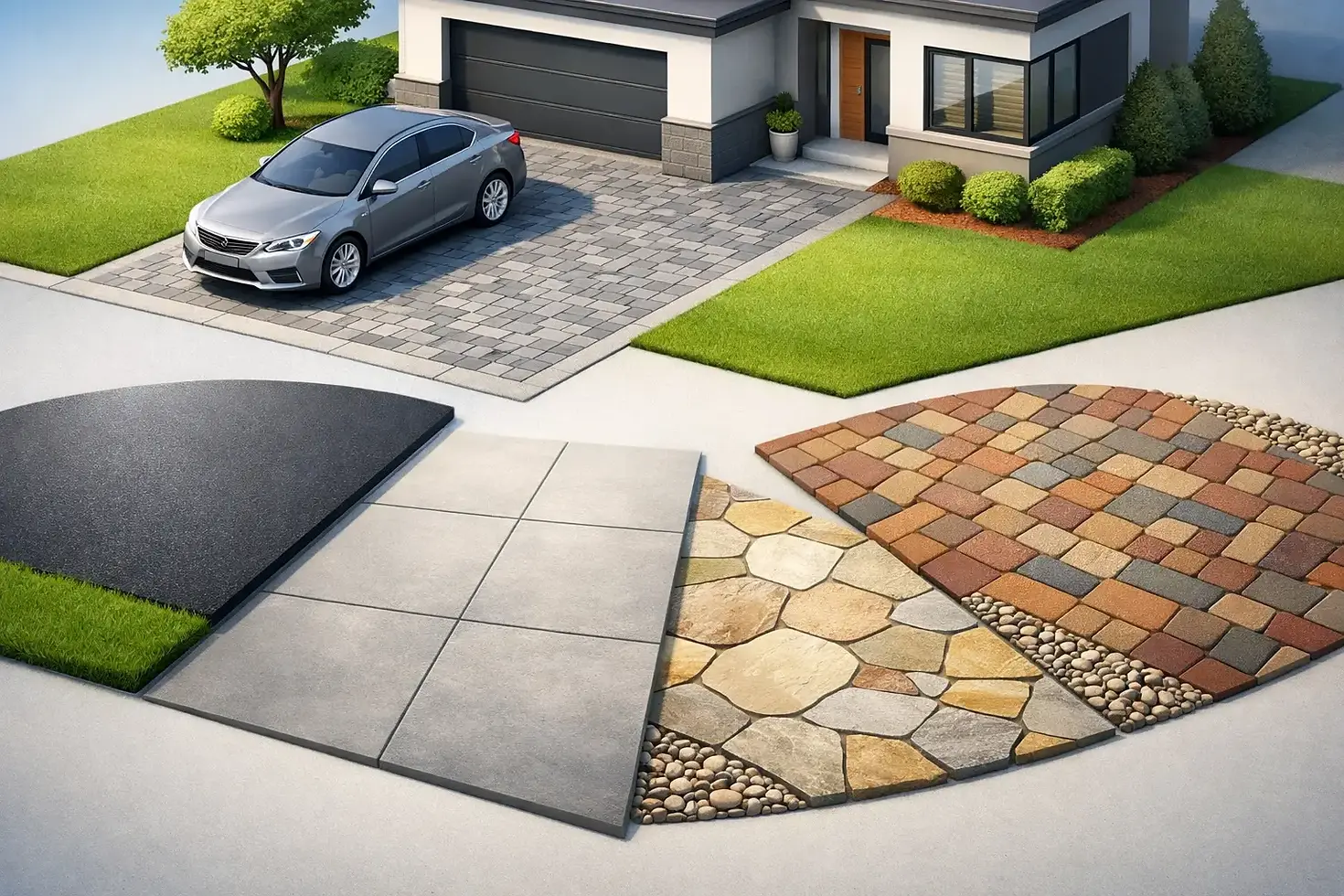
Most property owners end up choosing between asphalt, concrete, gravel, or brick pavers. Each one has clear strengths, and each comes with trade-offs.
Asphalt
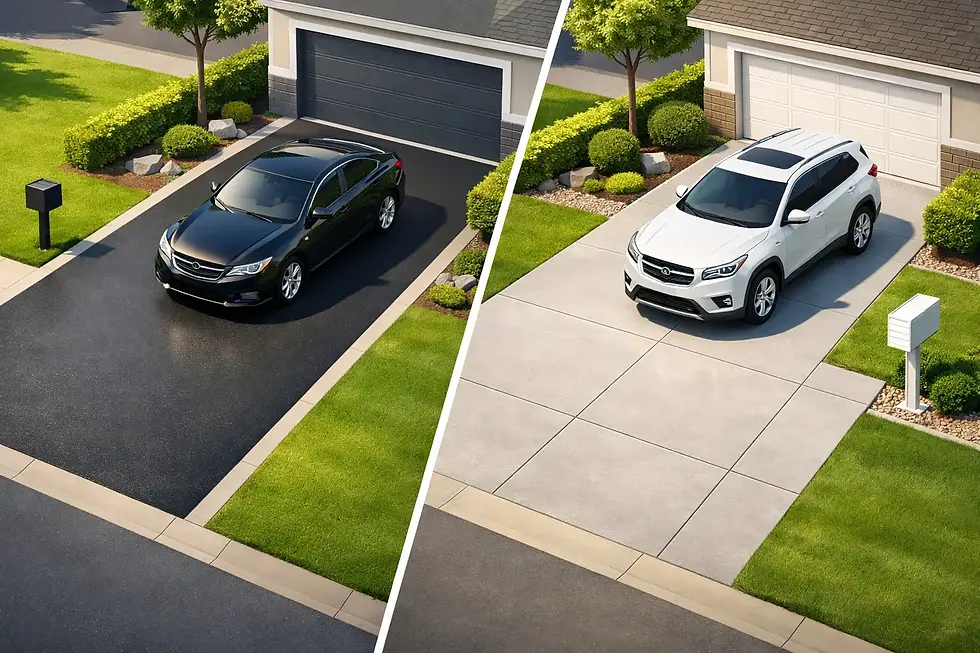
Asphalt is a practical choice for many homes and commercial properties because it offers a clean appearance, solid durability, and a relatively efficient installation process. It handles everyday vehicle traffic well and gives properties a finished, well-kept look without pushing costs too high.
For many Delmarva property owners, asphalt strikes the best balance between performance and value. It is especially appealing if you want a smooth driving surface and a material that can be maintained through sealcoating and periodic repairs or resurfacing. Like any paved surface, it does best when the base is prepared correctly and drainage is addressed.
The trade-off is that asphalt does need maintenance over time. Sun, water, traffic, and seasonal wear will eventually affect the surface. The good news is that maintenance is usually straightforward when handled before damage spreads.
Concrete
Concrete is known for its clean look and long service life. It can be a good option for property owners who prefer a lighter-colored surface or want a more rigid pavement structure. In some settings, it also complements certain home styles better than asphalt.
The main drawbacks are cost and repair visibility. Concrete often comes with a higher upfront price, and when cracks or surface issues develop, repairs can stand out more. It also tends to be less forgiving than asphalt in certain conditions. For some owners, that is worth it. For others, it makes asphalt the more practical fit.
Gravel
Gravel is often the most budget-friendly option at installation, and it can work well on long rural driveways or lower-traffic properties where a more informal appearance is acceptable. It also allows water to pass through more easily than solid pavement in some applications.
But gravel usually requires more ongoing attention than people expect. Stones shift, ruts form, and edges can spread out over time. Snow removal, weed control, and regular regrading may become part of the routine. If you want a polished, low-maintenance finish, gravel may not give you that.
Brick pavers
Brick pavers offer the strongest decorative appeal of the common options. They can create a high-end entrance, define borders, and add character that standard pavement does not. For homes where curb appeal is a major priority, pavers can be an excellent choice.
They also come with a higher upfront investment and a different maintenance profile. Individual units can shift if the base is not built correctly, and weeds or joint sand issues may need attention over time. Pavers are often best for owners who want a more custom look and are comfortable paying for that detail.
What matters most when deciding
Once you understand the basic material options, the next step is narrowing them down based on your priorities.
If durability with everyday convenience is your top concern, asphalt is often the strongest all-around answer. If appearance is the top priority and you want something more decorative, pavers may be worth the higher cost. If your site is more functional than formal and you need to control installation expense, gravel may still make sense. If you prefer a specific finished look and are comfortable with a larger initial investment, concrete may be the right fit.
There is no universal best material. There is only the best fit for your property, your budget, and your expectations.
Think about maintenance honestly
A lot of driveway disappointment starts with mismatched expectations. Some owners want the least expensive installation but expect a long-lasting, low-maintenance surface. Others choose a premium decorative option without planning for the upkeep that keeps it looking sharp.
Be honest about how involved you want to be. If you prefer a surface that can be maintained professionally at intervals without constant hands-on attention, asphalt is often a very manageable choice. If you do not want loose stone movement, gravel may become frustrating. If you want pavers, be sure you are choosing them for the right reasons, not just because they look impressive in photos.
Match the material to the property style
The driveway should fit the property, not compete with it. A simple asphalt driveway can look exactly right on a wide range of homes and business properties because it is clean and understated. Brick pavers can elevate an entryway or tie into walkways and outdoor living spaces. Concrete can create a crisp, uniform look.
Think about the whole exterior. Garage doors, landscaping, sidewalks, parking needs, and drainage all influence what will look right and function well.
Why installation quality matters as much as material
Even the best answer to how to choose driveway paving materials will fall short if the installation is poor. Base preparation, grading, drainage, edge support, and compaction all matter. A lower-grade installation of a premium material is still a lower-grade installation.
That is why experienced local guidance matters. A contractor who understands Delmarva conditions can help you avoid common issues such as premature cracking, drainage failures, low spots, and surface breakdown. O.C. Paving works with property owners across the region on practical solutions that fit both the site and the budget, which is often what makes the final result hold up well.
Questions worth asking before you choose
Before making a final decision, ask a few simple but useful questions. How long do you expect to stay in the property? Is this a basic functional upgrade or part of a larger curb appeal improvement? Will the driveway mainly serve cars, or will it see heavier vehicles too? Do you want the easiest path to maintenance, or are you willing to invest more for a custom appearance?
The answers usually point you in the right direction quickly. They also help you have a more productive conversation with a contractor, because you are not just asking about materials in the abstract. You are talking about what works for your specific property.
A good driveway choice should feel sensible long before the first truck arrives. When the material fits the site, the budget, and the way you actually use the property, the result tends to look better, last longer, and cause fewer headaches down the road.


Comments